
If you’ve taken a stroll through the bustling lanes of Mumbai’s Colaba Causeway, scrolled through your Instagram feed, or checked out what India’s top streetwear brands like Jaywalking, Bluorng, or VegNonVeg are dropping, you’ve definitely noticed one massive trend.
Flat prints are officially boring.
Today, Indian streetwear is all about that tactile, 3D, touch-me texture. Everyone wants their brand’s logo or graphics to literally pop off the fabric. But if you are an apparel designer or a budding clothing brand founder in India trying to put your tech pack together, you’ve likely hit a massive roadblock.
When you want a raised effect, do you ask your manufacturer for a puff print or a high-density (HD) print?
If you get these two mixed up, don’t worry—you aren’t alone. In fact, clothing manufacturers across Tirupur, Surat, and Ludhiana face massive confusion daily because designers mix up these two 3D printing styles constantly in their tech packs. You ask for one, expect the other, and end up with a sample that looks nothing like your vision.
Let’s settle the puff print vs high density printing debate once and for all so your next streetwear drop turns out exactly how you envisioned it.
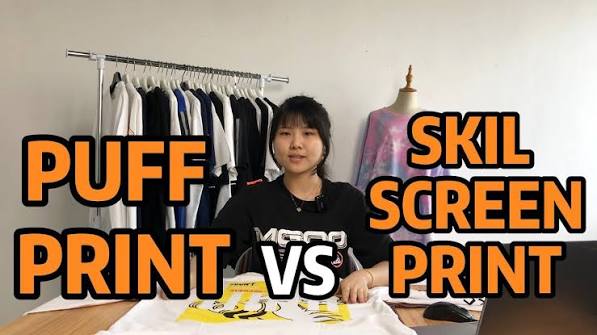
What is Puff Printing? The Soft, Foamy Graphic Savior
To understand the core battle of puff print vs high density printing, we first need to break down how each technique actually functions on a chemical level. Let’s start with the crowd favorite: the classic puff print.
The Science Behind the Puff
Puff printing—known in the local Indian printing hubs as “foam printing”—is essentially a magic trick involving heat.
The printer takes standard plastisol or water-based screen printing ink and mixes it with a special chemical foaming agent. When this ink mixture is first squeegeed onto your 240 GSM heavy-weight cotton t-shirt, it looks completely flat, just like standard screen printing.
The magic happens when the garment passes through a conveyor curing dryer. When exposed to high heat (around 150°C to 160°C), the foaming agent undergoes a chemical reaction. It literally bakes and expands, creating tiny air bubbles inside the ink.
[Ink + Foaming Agent] ───> Applied Flat ───> [Heat Curing] ───> [Expands & Puffs Up]
The Visual Appeal and Feel of Puff Inks
Because the ink expands outwards and upwards like baking bread, the final result has very distinct characteristics:
- Rounded Edges: The borders of your design won’t be sharp; they will be pillowy, curved, and soft.
- Matte Finish: Puff prints typically dry to a beautiful, soft matte finish.
- Soft Texture: When you press down on a puff print, it feels squishy and cushiony.
If your streetwear brand is going for a vintage, retro 90s aesthetic, or a cozy, oversized vibe, puff printing is your holy grail. It looks incredibly premium on heavy hoodies and thick cotton tees, giving a friendly, approachable, yet highly stylized depth to bold typography.
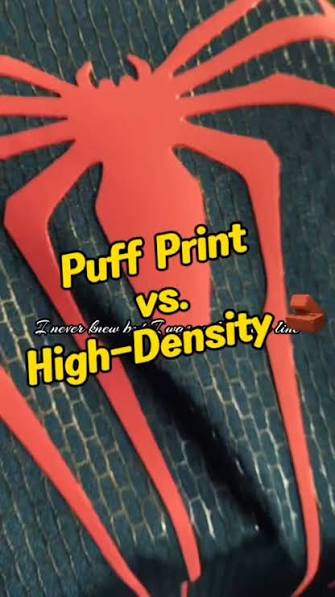
What is High-Density (HD) Printing? The Sharp, Brick-Like Streetwear Elite
Now, let’s look at the other side of the puff print vs high density printing ring. High-density screen printing—commonly referred to simply as HD printing by Indian manufacturers—is a completely different beast. It doesn’t rely on chemical expansion. Instead, it relies on sheer mechanical layering.
How High-Density Printing Works
Imagine building a brick wall, layer by layer. That is exactly what HD printing does.
Instead of standard mesh screens, printers use incredibly thick stencils created with specialized emulsion. The printer applies a high-viscosity ink—usually liquid silicone or a specialized premium plastisol ink—through these deep stencils.
The ink is applied in multiple sequential layers. The printer flashes (semi-dries) each layer before applying the next, stacking the ink vertically.
The Visual Appeal and Feel of HD Textures
Because this process uses a rigid stencil to hold the ink perfectly upright as it builds, the final output looks radically different from puff:
- Sharp, Angular Walls: The edges of an HD print are completely vertical, razor-sharp, and angular. It literally looks like a solid block or brick of rubber sitting on top of the fabric.
- Rigid Architecture: There is zero “squish” here. The print is dense, firm, and holds its structural shape flawlessly regardless of how the garment moves.
- Finish Variety: Depending on whether silicone or plastisol is used, HD prints can range from an ultra-sleek matte look to a high-gloss, wet-look finish.
If your streetwear brand leans toward a techwear, futuristic, minimal, or clean-cut luxury aesthetic, high density printing is the clear winner. It makes brand logos look incredibly sharp, precise, and high-end.
Puff Print vs High Density Printing: Key Differences at a Glance
When deciding between puff print vs high density printing for your next collection, it helps to see how they stack up side-by-side:
| Feature | Puff Printing | High-Density (HD) Printing |
| Edge Profile | Rounded, pillowy, dome-like | Sharp, 90-degree vertical walls |
| Texture | Soft, spongy, and expandable | Rigid, rubbery, and dense |
| Best For | Large typography, retro & vintage designs | Clean logos, geometric shapes, techwear |
| Ink Material | Plastisol/Water-based + Foaming agent | Premium liquid silicone or high-viscosity plastisol |
| Detail Retention | Low to Medium (Fine lines get swallowed) | Extremely High (Captures crisp, intricate lines) |
| Weight on Garment | Light and airy | Heavy (Can weigh down light fabrics) |
Durability and Care: Which 3D Texture Survives the Indian Machine Wash?
Let’s be real for a moment. The Indian household washing machine—especially when running on a standard cycle with harsh detergents—is where cheap prints go to die. If you are selling premium streetwear to Indian consumers, your garments need to survive the ultimate test of longevity.
When comparing puff print vs high density printing durability, who takes home the crown?
The Vulnerability of the Puff
While puff printing looks incredible fresh out of the polybag, it requires a little extra love. Because the print is filled with micro-air bubbles (which gives it that soft texture), it is inherently more delicate.
- The Threat: If exposed to high heat in a dryer or ironed directly, the air pockets can collapse, causing the print to look wrinkly or permanently deflated.
- The Care Reality: Over time, rough machine washing can cause the expanded edges of a puff print to crack or slightly peel away from the cotton fibers if the manufacturer didn’t cure it at the exact right temperature.
The Invincibility of HD Printing
High-density printing, especially when executed using liquid silicone, is practically indestructible.
- The Strength: Silicone is incredibly flexible and possesses a high tensile strength. It stretches effortlessly with the knitted fabric of your t-shirt and snaps back into its exact rigid shape without cracking.
- The Care Reality: An HD print can survive countless aggressive machine washes without losing its razor-sharp edges or its height. It won’t flatten, it won’t peel, and it won’t crack under normal wearing conditions.
Pro-Tip for Brand Owners: No matter which style you choose, always print an internal care label advising your customers to “Wash inside out in cold water” and “Never iron directly over the print.” This small addition protects your brand’s reputation and keeps your 3D apparel looking fresh for years.
Production Costs and Manufacturer Secrets in India
When building a streetwear line, your choice in the puff print vs high density printing showdown will directly impact your profit margins. Here is what’s happening behind the scenes in the Indian manufacturing hubs:
Why Puff Print is Cost-Effective
Puff printing is relatively cheap and fast to execute. Since it uses standard screen printing equipment and just requires an extra additive in the ink, most local screen printers across India can do it easily. It requires fewer passes of the squeegee, meaning lower labor costs and faster turnaround times for your brand.
Why High Density Printing Demands a Premium
HD printing is a labor of love (and precision). Creating the ultra-thick stencils requires specialized emulsion sheets that are more expensive. Furthermore, because the printer has to apply multiple layers and flash-cure each one sequentially, the production time per t-shirt skyrockets. If your factory is using premium liquid silicone for that luxury feel, your raw material costs will be significantly higher than a puff ink setup.
Final Verdict: Which One Should You Choose for Your Next Drop?
Choosing between puff print vs high density printing ultimately boils down to your brand’s unique identity, your target design, and your budget.
- Choose Puff Printing if: You are creating oversized hoodies, drop-shoulder tees with bold 90s text, want a soft and cozy tactile feel, and need to keep your production costs friendly for a budget-conscious audience.
- Choose High-Density Printing if: You are designing crisp, geometric brand logos, want an ultra-premium techwear or luxury look, require sharp details, and have the budget to invest in a premium, highly durable product.
Stop letting tech pack confusion ruin your samples! The next time you sit down to design for your brand, specify exactly whether you want the pillowy soft expansion of a puff print or the rigid, sharp-edged brick wall of an HD print.
Ready to bring your next streetwear vision to life? At makemyt-shirt.com, we specialize in both premium puff printing and ultra-sharp high-density printing to make sure your clothing line stands out in the crowded Indian streetwear scene. Get in touch with our manufacturing experts today to request a sample pack!
See Also
Puff Print VS Silk Screen Print
10 Creative Hindi Typography T-Shirt Design Ideas to Hook Desi Audiences
Master Guide: T-Shirt Back Graphic Design Layout Placement for Indian Streetwear Brands