
If you are a budding apparel brand owner, an Amazon print-on-demand seller, or an ambitious fashion entrepreneur, setting up your sourcing pipeline is the single most critical step in your journey. And when it comes to cotton knitwear and t-shirt fabrics in India, all roads lead to one place: Tirupur, Tamil Nadu.
Known as the “Knitwear Capital of India,” Tirupur processes thousands of tons of cotton yarn daily. However, stepping into the bustling lanes of Khaderpet or visiting the hectic trading hubs near Avinashi Road can feel deeply intimidating for a beginner.
Between fast-talking traders, mysterious local lingo, complex unit conversions, and hidden broker commissions, it is easy to feel overwhelmed or pay double the market rate.
Don’t worry! Sourcing knit fabric doesn’t require a master’s degree in textile engineering. You just need to know the insider rules of the game.
This ultimate guide will break down how to buy fabric in bulk from Tirupur wholesale market step-by-step—so you can negotiate like a veteran trader, get peak-quality fabric rolls, and maximize your profit margins.
1. Entering the Sourcing Hub: Khaderpet and Tirupur Fabric Trading Markets
When you step off the train at Tirupur Railway Station, the city’s textile energy hits you instantly. Automated looms humming in the background, auto-rickshaws loaded high with fabric rolls, and traders carrying color swatches are everywhere you look.
+-----------------------------------------------------------------------+
|                    TIRUPUR WHOLESALE SOURCING MAP                      |
+-----------------------------------------------------------------------+
|  [ Khaderpet Market ]    --> Ready stock, surplus, remnant rolls,     |
|                              and short-run knit fabrics.              |
|                                                                       |
|  [ PN Road & Rayapuram ] --> Direct knitting mills, custom dyeing     |
|                              houses, and large-order production.      |
|                                                                       |
|  [ Palladam Road Hub ]   --> Yarn exchanges, spinning mills, and      |
|                              raw grey fabric (Kora) suppliers.        |
+-----------------------------------------------------------------------+
Navigating Khaderpet Market
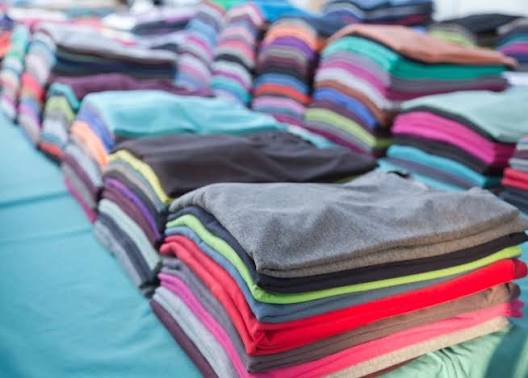
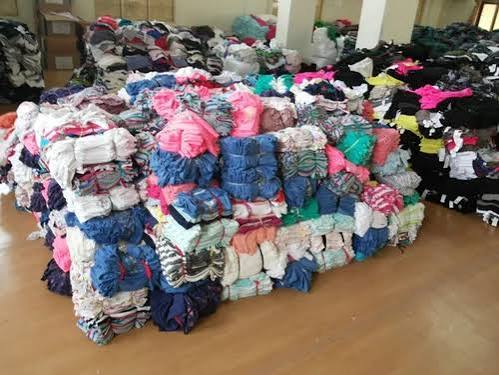
Khaderpet is ground zero for beginners, small-batch buyers, and fashion startups. Located right next to the railway station, this dense network of narrow alleys is packed with hundreds of fabric stockists, yarn traders, and garment wholesalers.
If you are looking for ready-to-dye knit rolls, surplus export fabric, or small roll quantities (30 kg to 100 kg), Khaderpet is your place.
Heading Beyond Khaderpet: PN Road and Rayapuram
If you are planning to order over 500 kg of custom-dyed combed cotton, you’ll want to head slightly outside the main market toward PN Road, Rayapuram, or Kamaraj Road. This is where the direct mill agents, dyeing units, and major knitting setups operate.
Local Insider Tip: Never walk into a market shop wearing pristine corporate attire carrying a glossy laptop bag. Dress casually in comfortable cottons, carry a measuring tape, a notebook, a fabric swatch cutter, and an open mind. In Tirupur, looking like an active production manager earns you instant respect!
2. The Weight Measurement Puzzle: Why Bulk Fabric is Bought in Kilograms ($Kg$), Not Meters ($Mtr$)
If you walk up to a wholesale supplier in Tirupur and ask, “Bhaiya, what is the price per meter for 100% combed cotton?”, the trader will immediately realize you are a complete beginner.
In the retail dress-material world, woven fabrics (like denim, linen, or saree silk) are measured and sold in meters or yards. But in the knitwear universe—which dominates Tirupur—commercial fabric is almost exclusively bought and calculated in kilograms ($Kg$).
                KNIT FABRIC METRIC FORMULA

  Weight (Kg) = [ Length (M) x Width (M) x GSM (g/m²) ] ÷ 1000
Why Do Knit Wholesalers Sell Fabric by the Kilo?
- Elasticity and Stretch: Knitted loops (like jersey, rib, or fleece) inherently stretch. Measuring a flexible, stretchy fabric with a meter stick is inconsistent; the length changes depending on how hard the fabric is pulled.
- Yarn Buying Consistency: Spinning mills sell raw cotton yarn by weight ($Kg$). Knitting factories convert that yarn into fabric rolls. Maintaining $Kg$ across the supply chain keeps cost accounting straightforward.
When learning how to buy fabric in bulk from Tirupur wholesale market, your first mental shift must be pricing everything per kilo.
Whether you are buying 100% Super Combed Cotton, Cotton-Polyester blends, or Bio-Washed Single Jersey, your quote will sound like: “₹280/Kg + GST.”
3. Spotting Fabric Quality: Using GSM Metrics to Calculate Your T-Shirt Yield
To calculate costs accurately, you must master two key metrics: GSM (Grams per Square Meter) and Garment Yield.
What is GSM in Knitwear Fabrics?
GSM stands for Grams per Square Meter. It measures the density and weight of the fabric thickness:
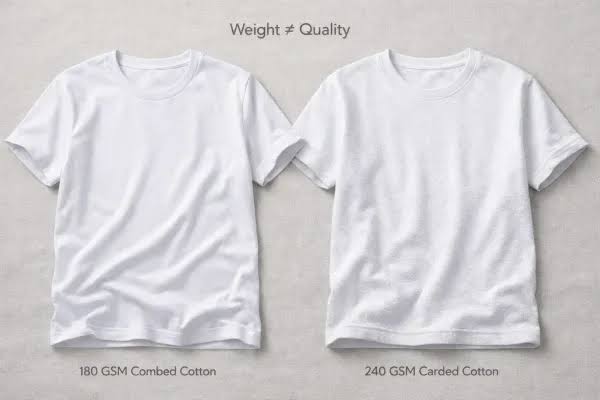
- 140–160 GSM: Lightweight, highly breathable (Ideal for summer wear and budget promotional t-shirts).
- 180–200 GSM: Standard medium-weight (The golden sweet spot for premium retail graphic tees).
- 240–300+ GSM: Heavyweight knit (Used for luxury oversized streetwear, hoodies, and sweatshirts).
How to Calculate Your Garment Yield (Shirts Per Kilo)
The ultimate question every t-shirt brand owner must answer is: “How many t-shirts will I get out of 1 Kilogram of fabric?” This number is known as your yield.
Let’s run a practical calculation for a standard Men’s Medium (M) Round-Neck T-Shirt:
| Fabric Type | Fabric GSM | Width (Dia Inches) | Approx. Yield (T-Shirts per Kg) |
| Lightweight Jersey | 150 GSM | 36″ Tubular / 72″ Open | 4.5 to 5.0 Shirts / Kg |
| Standard Combed Cotton | 180 GSM | 36″ Tubular / 72″ Open | 3.8 to 4.2 Shirts / Kg |
| Heavyweight Streetwear | 240 GSM | 36″ Tubular / 72″ Open | 2.6 to 3.0 Shirts / Kg |
| French Terry Fleece | 320 GSM | 36″ Tubular / 72″ Open | 1.8 to 2.1 Hoodies / Kg |
The Math Formula for Fabric Yield:
To calculate your precise fabric consumption, use this universal industry formula:
$$\text{Fabric Per Shirt (Grams)} = \left( \text{Length in Meters} \times \text{Width in Meters} \times \text{GSM} \right) + \text{Wastage Factor (10\%)}$$
If 1 Kg ($1000\text{g}$) of 180 GSM fabric yields roughly 4 t-shirts, and your fabric costs ₹300 per Kg:
- Raw Fabric Cost per T-Shirt: $₹300 \div 4 = \mathbf{₹75\text{ per t-shirt}}$.
Understanding this math prevents you from getting tricked by low per-kilo prices on ultra-heavy fabrics that actually deliver far fewer shirts per roll!
4. The Sourcing Playbook: Avoiding Broker Traps, Shrinkage Issues, and Quality Scams
Visiting a wholesale textile market for the first time comes with a learning curve. Below is your step-by-step game plan to protect your investment and buy fabric like a seasoned pro.
+-----------------------------------------------------------------------+
|                    THE SOURCING CHECKLIST                             |
|                                                                       |
|  [1] Sidestep Unsolicited Street Brokers                              |
|  [2] Demand Compacted / Shrink-Controlled Fabrics                     |
|  [3] Conduct On-Spot GSM & Burn Tests                                 |
|  [4] Inspect Dye Lot Consistency Across Rolls                         |
|  [5] Lock In Written Terms for Lab Dips & Payment                     |
+-----------------------------------------------------------------------+
Trap #1: The Unsolicited Market Brokers
The moment you park your vehicle near Khaderpet, street brokers (“touts”) may approach you offering to show you “the cheapest mill shops”.
- The Reality: These intermediaries add a 5% to 10% hidden commission on top of your fabric bill, which the shopkeeper quietly bakes into your price quote.
- The Solution: Politely decline their assistance (“Enakku therium, thambi” / “I know the way, thanks”). Deal directly with established shop owners, registered mill distributors, or factory outlets.
Trap #2: Un-Compacted Fabric (The Shrinkage Nightmare)
There is nothing worse than manufacturing 500 beautiful t-shirts only to have them shrink two sizes smaller after a single home wash.
When knit fabric comes off the circular knitting machine, the yarn loops are under extreme tension. If the fabric is dyed and rolled directly without a processing step called compacting, it will shrink dramatically (up to 12–15%) when washed.
- Your Play: Always demand “Compacted, Shrink-Controlled Fabric.” Ask the supplier for a guaranteed shrinkage limit (ideally under 3% to 5%).
- The Test: Cut a $10\text{ cm} \times 10\text{ cm}$ swatch from the roll, submerge it in warm water, dry it thoroughly, and remeasuring it with a ruler right in front of the trader.
Trap #3: Polyester Blends Disguised as 100% Pure Cotton
Some dishonest traders might offer you “100% Super Combed Cotton” at impossibly low rates (e.g., ₹180/Kg when market rates are ₹280/Kg). Often, these are PC (Polyester-Cotton) or Chief Value Cotton (CVC) blends containing 30–40% synthetic polyester.
- Your Play: Always carry a small pocket lighter. Pull out three threads from the fabric roll and perform a quick burn test:
- Pure Cotton: Burns with a steady amber flame, smells like burning paper, and leaves soft, gray ash that crumbles completely.
- Polyester Blend: Melts quickly, curls up into hard black plastic beads, smells chemically sweet, and leaves a hard bead you cannot crush with your fingers.
Trap #4: Dye-Lot Variations (Batch Shading)
If you buy 200 Kg of Navy Blue fabric spread across 8 different rolls, do not assume every roll came from the same dye vat!
Inconsistent dyeing causes noticeable color shading between rolls. If your cutting team mixes sleeves from Roll #1 with front panels from Roll #4, your finished t-shirt will look two-toned.
- Your Play: Check the Dye-Lot Numbers on the roll tags. Ensure all rolls within a single color order carry the exact same Lot Number. Inspect the edges (selvedge) of the fabric under neutral white daylight to check for side-to-center shading.
5. Key Trade Terminology You Need to Know
To sound like a seasoned buyer on the streets of Tirupur, drop these essential industry terms into your conversations:
+-------------------+----------------------------------------------------+
| TRADE TERM        | WHAT IT ACTUALLY MEANS IN TIRUPUR                  |
+-------------------+----------------------------------------------------+
| Kora (Grey)       | Raw, un-bleached, un-dyed knit fabric directly     |
|                   | off the knitting machine.                          |
|                   |                                                    |
| Dia (Diameter)    | The tubular width of the fabric roll (e.g., 36"    |
|                   | Dia opens up to 72" full width).                   |
|                   |                                                    |
| Bio-Wash          | An enzyme treatment that removes surface fuzz,    |
|                   | giving the fabric a silky smooth handfeel.         |
|                   |                                                    |
| Gauge (gg)        | The tightness of the knit loops on the machine     |
|                   | (e.g., 24-gauge vs. 28-gauge fine knit).           |
|                   |                                                    |
| Lab Dip           | A small dyed fabric swatch submitted by the mill   |
|                   | for shade approval before bulk dyeing.             |
+-------------------+----------------------------------------------------+
6. How to Structure Payment and Delivery Terms
Once you’ve selected your fabric rolls and negotiated your per-kilo pricing, it’s time to finalize your deal terms.
TYPICAL NEW-BUYER TRANSACTION FLOW
[ 30% Advance Payment ] --> [ Mill Processing & Dyeing ] --> [ Quality Inspection ] --> [ 70% Balance Clearance ] --> [ Dispatch via Lorry Transport ]
Payment Norms for New Buyers
If you are buying ready stock in Khaderpet, transactions are strictly on a cash, UPI, or immediate RTGS/NEFT basis.
If you are placing a fresh manufacturing order with a dyeing mill:
- Advance: 20% to 30% advance when placing the order.
- Balance: Remaining 70% cleared upon presentation of the transport receipt (LR – Lorry Receipt) or before rolls leave the mill yard.
- Credit Terms: Do not ask for 30-day or 60-day credit on your first purchase. Credit in Tirupur is earned only after 3 to 6 months of consistent, high-volume transactions.
Transport and Logistics
You do not need to haul heavy fabric rolls home yourself! Tirupur features a highly efficient transport network with booking offices for major South Indian and pan-India logistics providers (like V-Trans, ARC, Sugama, TCI, and local lorry booking services).
Ask your supplier to pack rolls securely in polythene wraps with woven outer gunny bags to protect them from rain and road dust during transit.
Final Verdict: Building Your Tirupur Sourcing Advantage
Learning how to buy fabric in bulk from Tirupur wholesale market is the ultimate superpower for any t-shirt or fashion brand. By bypassing middlemen, understanding yield math, demanding compacted fabrics, and speaking the industry language, you can significantly lower your garment unit costs while delivering top-tier quality to your customers.
Start small, build strong direct relationships with reliable mill agents, always verify your GSM, and wash-test your swatches. Before long, you’ll be navigating the streets of Tirupur like a seasoned textile pro!
See Also
Tirupur Wholesale Market
Tirupur cloth wholesale market, Tirupur hosiery manufacturers, ,Tirupur textiles wholesale market
Master Guide: How to Find T-Shirt Manufacturers in Tirupur
The Booming Custom T-Shirt Market in India: Trends, Growth, and Opportunities