
Have you ever pulled out your favorite graphic tee, put it on, and noticed that the neckline looks stretched, wavy, or completely out of shape? It’s a super frustrating moment. You love the print, the body fits perfectly, but that bacon-like wavy collar makes the whole outfit look old and messy.
Whether you are a casual buyer wondering why your daily tees keep losing their shape, or a custom apparel brand owner trying to figure out T-shirt neck rib quality, understanding what happens at the neckline is key to making your tees last longer. So, Why T-Shirt Collars Become Loose? And How To Fix It
1. Why Do T-Shirt Necklines Stretch?
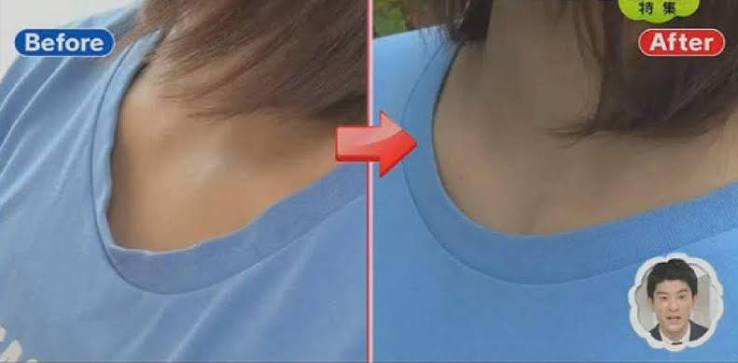
T-shirt necklines stretch primarily because the neck rib fabric loses its elastic recovery after repeated mechanical stress, heat exposure, or poor manufacturing construction. When the ribbing lacks elastane (spandex) or is stretched beyond its stretch-recovery threshold during pulling or washing, the knitted loops permanently deform, leaving you with a loose or wavy collar.
2. What is Neck-Rib Fabric?
To understand a stretched T-shirt collar, you first need to look closely at how the collar fabric is made. Unlike the body of a standard T-shirt—which is usually a flat single jersey knit—the neckline is crafted using a specialized circular knit known as rib fabric.
Single Jersey Knit (Body)      Rib Knit Fabric (Collar)
   (Flat & Smooth)               (Vertical Ridges)
    v v v v v v v                 || || || || ||
    v v v v v v v                 || || || || ||
Rib knitting creates visible vertical ridges on both sides of the cloth by alternating knit and purl stitches. This structure gives the material natural horizontal stretch, making it easy to slip over your head.
- 1×1 Rib: Alternates one knit stitch and one purl stitch. It feels lightweight, smooth, and flexible, making it standard for lightweight or everyday basic tees.
- 2×2 Rib: Alternates two knit stitches and two purl stitches. It creates prominent vertical lines, offers higher recovery force, and is usually reserved for heavyweight tees, hoodies, or streetwear fashion.
When a manufacturer uses low-grade neck rib fabric or skips ribbing altogether by using body fabric for the neckband, the collar lacks structural memory and stretches out almost immediately.
3. Rib Recovery and Elastane
Stretch is only half the equation; the real hero of a crisp neckline is recovery.
- Stretch: How far the fabric can expand when you pull your tee over your head.
- Recovery: The ability of those knitted loops to snap right back to their original size and shape.
100% pure cotton ribbing has natural stretch, but cotton fibers lack innate elastic memory. Once pulled repeatedly, pure cotton yarn suffers from fiber creep—meaning it stays slightly stretched out every single time you wear it.
To prevent a floppy neckband, high-quality manufacturers mix elastane (commonly known as Spandex or Lycra) into the cotton rib. Adding 3% to 5% elastane creates a spring-like force inside the knit. When you stretch the collar to put the shirt on, the elastane pulls the cotton yarns right back into place, keeping the neckline flat and snug even after dozens of laundry cycles.
4. Rib-to-Neckband Length Ratio
Even if you use top-grade fabric with elastane, a collar can still sag if the pattern dimensions are incorrect. This comes down to the rib ratio for T-shirt neck construction.
Because rib fabric stretches much more than the body jersey fabric, the rib strip must be cut shorter than the actual neck hole opening of the T-shirt body.
| Parameter | Incorrect Ratio (Too Long) | Correct Ratio (Balanced) | Incorrect Ratio (Too Short) |
| Rib Cut Length | 95%–100% of neckline length | 80%–85% of neckline length | Less than 75% of neckline length |
| Tension during Sewing | None (sewn flat) | Evenly stretched while joining | Excessively stretched |
| Final Neckline Appearance | Loose, sagging, or flaring out | Sits flat against the collarbone | Puckered, gathered, or twisted body fabric |
When sewing the collar, the operator carefully stretches the shorter rib band so it aligns with the larger neck opening. Once released, the rib snaps back, gathering the body fabric slightly and forcing the collar to lay flat against your collarbone. If the factory cuts the rib strip too long, there isn’t enough tension, and you end up with a loose collar right off the shelf.
5. Compatibility Between Body Fabric and Rib Shrinkage
Have you ever washed a brand-new tee only to find the collar puckering up like a ruffled accordion? That happens due to a mismatch in fabric shrinkage rates.
[Body Fabric: 3% Shrinkage]  <--- MISMATCH --->  [Rib Fabric: 8% Shrinkage]
                                     |
                                     v
                        (Result: Wavy, Puckered Collar)
All knitted cotton fabrics shrink when exposed to water and heat. However, single jersey body fabric and ribbed collar fabric shrink at completely different rates unless they are properly matched and pre-shrunk during production.
- If the rib shrinks MORE than the body: The collar contracts tightly, pulling and gathering the body fabric around the chest and shoulders, causing weird puckering.
- If the rib shrinks LESS than the body: The shirt body tightens up while the collar stays large, leaving you with extra, loose collar fabric that waves around your neck.
Quality garment makers run strict wash test protocols to calculate pre-wash dimensional stability, ensuring both the body and rib shrink at the exact same percentage.
6. Why Heavyweight T-Shirts Need Stronger Neck Construction
Heavyweight T-shirts (ranging from 220 GSM to 300+ GSM) have become huge in modern streetwear fashion. However, a thick, heavy body fabric places massive strain on the collar.
A thin 1×1 rib knit simply cannot support the weight of a heavy 240 GSM cotton body. The weight of the hanging shirt constantly pulls down on the collar seam, causing rapid sagging.
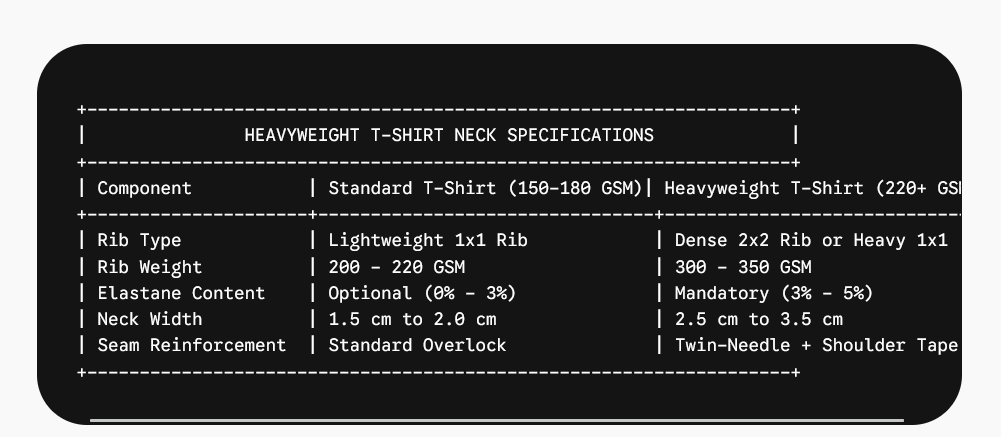
Heavyweight tees require a high-density, thick rib band—often reinforced with a wider width—to anchor the garment securely without stretching out under its own weight.
7. Single-Needle vs. Double-Needle Neckline Finishing
The way the neckband is stitched onto the body fabric directly dictates how long the collar maintains its shape.
Single-Needle Stitch (Basic)          Double-Needle Topstitch (Durable)
     | (One thread line)                  || (Two parallel thread lines)
     v                                    vv
[Rib]--------------[Body]            [Rib]==============[Body]
(Flips up easily after washing)      (Lays flat, locks raw edges inside)
Single-Needle Stitching
This is the fastest, cheapest construction method. The neckband is attached using a standard overlock seam.
- The Problem: The inner seam allowance is left floating inside. After a couple of washes, that inner seam rolls upward, causing the entire collar to flip out and lie awkwardly.
Double-Needle Topstitching
Here, after the rib is overlocked to the neckline, a twin-needle machine lays down two parallel rows of coverstitching directly over the seam flat on the right side of the shirt.
- The Benefit: It locks the raw seam allowance flat against the inside of the shirt, distributes pulling tension evenly across two rows of thread, and prevents the collar band from rolling, twisting, or stretching out of shape.
8. Importance of Shoulder-to-Shoulder Tape
If you look inside a high-quality T-shirt, you will notice a soft strip of fabric covering the inside seam running from the left shoulder, across the back of the neck, all the way to the right shoulder. This is called shoulder-to-shoulder neck taping.
    [Left Shoulder] ===(Taped Reinforcement Seam)===> [Right Shoulder]
                                  ||
                        Prevents Sagging & Stretching
This thin tape serves three major purposes:
- Structural Anchor: It binds the front and back shoulder panels together, preventing the neck opening from widening horizontally over time.
- Hanger Drag Prevention: When you hang your shirt on a clothes hanger, the weight of the garment pulls on the shoulders. The tape absorbs this stress so your collar doesn’t stretch sideways.
- Skin Comfort: It covers the rough overlock stitches across the back of your neck, making the shirt feel smooth and comfortable against your skin.
Without shoulder-to-shoulder taping, even a high-quality rib collar will slowly widen as the shoulder seams drop and stretch outward.
9. Manufacturing Causes vs. Washing Causes
When a T-shirt collar turns wavy or loose, who is to blame—the manufacturer or your laundry routine? The reality is that both play a role. Here is how manufacturing defects compare to home care mistakes when considering why T-shirt collars become loose.
Manufacturing Causes (Built-In Flaws)
- Zero Elastane in Ribbing: Using 100% carded cotton rib that lacks elastic recovery memory.
- Incorrect Cutting Ratio: Cutting the neckband strip too long relative to the chest collar pattern.
- Skipping Topstitching: Omitting the double-needle coverstitch to save factory production costs.
- Unstable Fabric Shrinkage: Combining unwashed jersey fabric with high-shrinkage ribbing.
Washing & Care Causes (User Habits)
- Hot Water Washing: Washing in hot water breaks down elastane synthetic threads inside the ribbing over time.
- Hanger Abuse: Shoving coat hangers forcibly through the narrow neck opening instead of inserting them from the bottom hem upwards.
- Heavy Machine Spinning: High-RPM spin cycles wring out garments aggressively, physically stretching out knitted loops.
- Hanging Dry by the Collar: Pegging wet, heavy cotton tees on a washing line by the neck collar lets gravity stretch the wet fibers downwards.
10. How Brands Should Test Neck Recovery
For custom apparel creators, t-shirt brand owners, and manufacturers, preventing collar failure requires rigorous quality control before printing and shipping orders. Here is a simple 3-step neckband recovery test protocol every brand should run:
Step 1: The Stretch-Recovery Test
- Lay the finished T-shirt flat on a smooth surface and measure the unstretched collar width from edge to edge (Record measurement as A).
- Manually pull the neck opening wide with a fixed force (simulating pulling it aggressively over a large head size) for 10 seconds.
- Release the collar completely and let it sit undisturbed for 1 minute.
- Re-measure the collar width (Record measurement as B).

Step 2: The 5-Cycle Laundry Stretch Test
Wash sample shirts through 5 full home laundry cycles using warm water and normal machine drying. Check for seam rolling, collar waving, or neck opening expansion exceeding 1.5 cm total circumference.
Step 3: Steam Recovery Check
Apply direct garment steam to a slightly stretched collar. High-quality elastane-blended ribbing should snap right back under heat and steam moisture. If it remains limp, the rib fabric lacks proper synthetic elastane content.
11. Troubleshooting Table
If you are dealing with awkward necklines on your current collection or wardrobe, use this diagnostic guide to pinpoint the root cause and apply the right fix.
| Problem Symptom | Root Cause | Manufacturing Fix | Consumer Workaround / Fix |
| Loose Neck | Rib ratio cut too long; no elastane in neck rib quality | Cut rib strip 15–20% shorter than neckhole; add 5% elastane | Dip collar in boiling water for 1 min, pat dry, and steam iron tight |
| Wavy Neck (Bacon Collar) | Differential shrinkage between body and rib; over-stretched sewing | Match pre-shrinkage rates; adjust operator tension while sewing | Steam iron the collar using a wet pressing cloth to shrink fibers back |
| Tight Neck | Rib strip cut too short (<75% ratio); poor neck opening grading | Increase neck circumference length in pattern design | Gently damp-stretch collar manually over a chair back while drying |
| Twisted Neck | Fabric torque/skewness in cheap tubular knits; uneven seam taping | Align fabric grainlines before cutting; balance neck taping tension | Iron collar flat with heavy starch spray to force alignment |
| Colour Mismatch | Rib and body dyed in separate batch lots using different fabric blends | Dye rib fabric and jersey body together in the exact same dye bath lot | Avoid buying mixed-blend tees without matching batch color codes |
12. Frequently Asked Questions (FAQs)
Q1. How do I fix a stretched T-shirt collar at home?
To temporarily fix a stretched T-shirt collar, submerge the collar in hot boiling water for 1 to 2 minutes to relax and contract the deformed cotton fibers. Carefully pat out excess water with a towel, reshape the collar flat with your fingers, and use a hot steam iron to press the ribbing back into place. Always dry flat instead of hanging.
Q2. Why does my T-shirt collar look like bacon after washing?
The “bacon collar” look happens when the rib fabric loses its elastic recovery or shrinks at a different rate than the rest of the shirt. Aggressive machine spin cycles and high-heat drying distort the knit loops unequally, causing the outer edge of the collar to ripple and wave.
Q3. Is 100% cotton rib good for T-shirt necklines?
While 100% cotton is soft and breathable, it is generally poor for long-term neckband durability. Without a small blend of elastane (3% to 5% Spandex), pure cotton rib lacks the elastic memory required to bounce back after being stretched over your head repeatedly.
Q4. What is the best rib ratio for a T-shirt neckband?
The industry standard rib ratio for a T-shirt neck is approximately 1:0.80 to 1:0.85. This means the rib band strip should be cut to about 80% to 85% of the total circumference of the body neckline opening to ensure proper tension and a flat sit.
Q5. How can I prevent my T-shirt collar from going loose in the wash?
Wash your T-shirts in cold water on a gentle cycle, turn them inside out, and avoid heavy high-RPM spin modes. Never hang wet T-shirts by their collar on a line; instead, fold them over a drying rack or lay them flat. Always slide hangers into shirts from the bottom hem up to avoid stretching the neck opening.
Wrap Up
A loose, sagging, or wavy collar isn’t just bad luck—it is a direct result of fabric mechanics, elastane recovery properties, rib ratios, and seam stitching quality.
Whether you’re shopping for your daily wardrobe or manufacturing custom merchandise for your brand using MakeMyT-shirt.com, paying attention to neck rib quality, shoulder taping, and twin-needle stitching ensures your tees keep looking sharp wear after wear!