
So, you’ve been running a Print-on-Demand (POD) store or a small streetwear label for a while now. You design a cool graphic, upload it to a fulfillment portal, and when a customer orders, they print and ship it. It’s clean, safe, and has zero inventory risk.
But let’s be brutally honest for a minute: those profit margins are hurting your business growth.
When you pay ₹250 to ₹400 for a single basic printed t-shirt from a POD supplier, your ability to scale vanishes. You can’t offer premium heavy-weight fabrics, you can’t customize the neck tags with your own logo, and your packaging is completely out of your control. The moment you want to scale up, build real brand equity, and pocket a healthy 60% to 70% margin, you have to transition to custom bulk manufacturing.
And in India, bulk knitwear begins and ends in one place: Tirupur. And the question – How to Find T-Shirt Manufacturers in Tirupur
Known as the textile capital of India, this buzzing city in Tamil Nadu accounts for an overwhelming chunk of the country’s cotton knitwear production. From local Indian brands to global giants like Nike, Adidas, and H&M, everyone sources from here.
But here lies the catch that freezes thousands of independent creators: finding reliable, small-scale custom clothing manufacturers in Tirupur is notoriously difficult for outsiders.
If you show up randomly or try to cold-message factories online, you will likely be ignored, hit with massive Minimum Order Quantities (MOQs) of 1,000+ pieces, or scammed by smooth-talking middlemen who don’t even own a sewing machine.
Don’t let these structural barriers stop you. In this best-in-class insider guide, we will break down exactly how the Tirupur apparel production ecosystem works, how to vet apparel factories online like a seasoned sourcing agent, and the precise tactical strategy you need to convince premium factories to accept low MOQs for your very first production run.
Decoding the Tirupur Ecosystem: How the Hub Operates
To successfully source custom t-shirts, you need to understand that Tirupur is not just a collection of complete factories. Instead, it operates as a highly specialized, hyper-fragmented decentralized ecosystem.
Unlike massive vertically integrated setups where raw cotton goes in one side and a packed t-shirt comes out the other, Tirupur relies on thousands of micro-units that excel at just one specific job.
When you buy a custom t-shirt, your production lifecycle moves through several independent stages across the cluster:
[Spinning Mills] ➔ [Knitting Units] ➔ [Dyeing & Processing Houses] ➔ [Printing/Embroidery] ➔ [CMT Units]
- Spinning Mills: These facilities take raw cotton and spin it into yarn of various qualities (like carded, combed, or compact yarn) and weights (measured in “Counts”, such as 20s, 24s, or 30s count).
- Knitting Units: They buy the yarn and use high-speed circular knitting machines to transform it into rolls of un-dyed, greige fabric (like Single Jersey for basic tees, Pique for Polos, or French Terry for premium hoodies).
- Dyeing & Processing Houses: This is where the fabric rolls get washed, bleached, dyed your custom Pantone color, and treated for shrinkage control. Tirupur is famous for its strict Zero Liquid Discharge (ZLD) eco-friendly treatment facilities.
- Printing & Embroidery Shops: Independent units dedicated purely to chest prints, high-density screen printing, puff prints, or digital direct-to-garment work.
- CMT (Cut, Make, Trim) Units: This is the sewing floor where fabric is cut to your size charts, stitched together, quality-checked, tagged, and packed into individual polybags.
Why This Architecture Matters to a Startup Brand
When you look for garment manufacturers in India online, you will encounter many units that claim to do everything. In reality, most small-to-mid-tier factories are simply CMT units that manage the cutting and sewing in-house while outsourcing the knitting, dyeing, and printing to companion units down the street.
If you understand this, you won’t get frustrated when a manufacturer tells you that a specific custom fabric color requires a delay—they are simply waiting on the local dyeing house to finish processing the batch!
Digital Sourcing: How to Vet Apparel Factories Online Safely
Most young entrepreneurs cannot instantly hop on a flight or a train to Coimbatore and take a bus down to Tirupur just to scout factories. You will likely start your search on major business-to-business (B2B) portals like IndiaMART, browse through listings on Alibaba, or dig through Google Maps pins.
While these online directories host incredible, genuine talent, they are also filled with unverified trading agents, brokers, and low-quality workshops. Here is exactly how to filter the noise and find verified t-shirt suppliers without getting burned.
Major Red Flags to Watch Out For
Red Flag #1: The Missing Production Floor
If a listing’s gallery only features flawless, high-contrast catalog photos of models wearing generic clothing or stock images pulled straight from Pinterest, they are almost certainly a middleman broker. A real factory profile will proudly showcase unedited, raw photos of rows of Juki stitching machines, heaps of fabric rolls, and active workers on a production line.
Red Flag #2: The “Everything Supplier” Syndrome
If an online vendor claims they can seamlessly manufacture heavy-weight luxury hoodies, leather jackets, denim jeans, silk sarees, and sportswear shorts all under one roof, run away. True Tirupur specialists focus strictly on knitted cotton apparel. If they claim to master woven fabrics and heavy outerwear simultaneously, they are sourcing items from other states and adding a massive broker markup onto your bill.
Red Flag #3: Complete Refusal of a Physical Virtual Tour
In today’s connected market, any legitimate factory executive will gladly agree to a quick 2-minute WhatsApp video call to give you a live walk-through of their sampling room or sewing line. If they consistently give excuses, reject video calls, or insist on keeping communication limited to text and generic emails, they do not own the infrastructure they are selling you.
Step-by-Step Online Verification Checklist
To save your business time, use this quick checklist before sending over your proprietary tech packs or design assets:
- Cross-Check TEA Membership: Verify if the vendor is listed in the official database of the Tiruppur Exporters’ Association (TEA) or the Apparel Export Promotion Council (AEPC). Membership in these bodies indicates a legally compliant business entity.
- Analyze Google Review Timelines: Look at the factory’s Google Maps profile. Don’t just look at the overall star rating—filter by the oldest reviews. A manufacturer with genuine reviews spanning over 3 to 5 years is far safer than a brand-new profile flooded with 50 suspicious five-star reviews over the last two weeks.
- Check for Regulatory Compliance: Ask for their basic business registrations. A trustworthy manufacturer will quickly share their GSTIN, MSME Udyam registration, and export certificates if you request them during onboarding.
The MOQ Strategy: How to Pitch a Factory for Low Minimum Orders
Let’s solve the absolute biggest hurdle in apparel sourcing: Minimum Order Quantities (MOQs).
When you approach a top-tier custom clothing manufacturer in Tirupur, they will often tell you their minimum order is 500 to 1,000 pieces per style/color. They aren’t trying to be rude; their business model is built around high-speed machinery setup costs. Setting up a giant screen-printing machine or running a massive commercial dyeing vessel for just 30 t-shirts loses them money.
However, many mid-tier and specialized small-batch manufacturers now explicitly support small fashion startups with flexible MOQs starting around 50 to 100 pieces per style.
To land these slots, you cannot talk like a hobbyist. You must pitch your brand strategically so the factory owner views you as a valuable long-term partner rather than a high-maintenance, low-volume distraction.
The Perfect Pitch Framework
| What NOT to Say (The Amateur Approach) | What to Say Instead (The Professional Sourcing Approach) |
| “Hi, I want to start a clothing brand. Can you print 20 t-shirts for me to test out? Let me know your cheapest price.” | “We are preparing to launch our seasonal capsule collection. We require a pilot run of 100 units per style across 2 colorways. We have fully prepared tech packs and vector artwork ready for your sampling team.” |
Four Rules to Get Factories to Lower Their MOQs
To make a lower production volume highly attractive to a commercial factory, structure your order using these cost-saving compromises:
1. Consolidate Your Fabric and Color Choices
If you tell a factory you want 50 pink shirts, 50 neon green shirts, and 50 acid-wash purple shirts, they will reject you instantly. Why? Because that requires three separate, small fabric-dyeing processes.
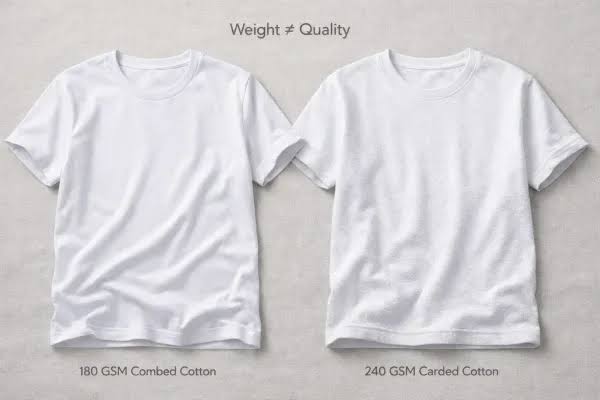
Instead, ask for 150 shirts using a single fabric type and color (like classic 240 GSM Black combed cotton). Let your variety shine through different graphic prints rather than different fabric batches. The factory can use one single roll of stock fabric, making your low MOQ easy to execute.
2. Keep Your Size Slices Realistic
If you are only ordering 100 total t-shirts, don’t try to offer ten different sizes from XXS to 5XL. That forces the factory to create ten separate manual fabric cutting patterns, which slows down their assembly line. Limit your initial pilot run to a tight, high-demand size split, such as:
- S: 15 pieces
- M: 35 pieces
- L: 35 pieces
- XL: 15 pieces
3. Pay Generously for Your Golden Sample
Never ask for free physical samples. Always offer to pay standard sampling fees (which usually run 2x to 3x the bulk production cost per piece). Inform the manufacturer that you expect the sampling fee to be adjusted and credited back into your final balance invoice once you sign off on the bulk order. This shows the factory manager that you have immediate skin in the game.
4. Frame Your Order as a “Pilot Run”
In your communications, always refer to your first minimal order as a Product Validation Run or a Pilot Release. Explain to their sales team that your brand operates on an agile, iterative drop model—meaning you launch small batches quickly, and once the fit and construction are validated by your audience, you scale into consistent, larger re-orders throughout the fiscal year.
Moving Forward with Confidence
Transitioning your apparel brand from basic print-on-demand services to custom bulk manufacturing is a massive milestone. It represents the exact moment you transform from a casual digital creator into a serious fashion brand director.
Navigating the decentralized, fast-moving landscape of Tirupur takes real patience and careful vetting. But by using clear tech packs, identifying real CMT units over unverified brokers, and bundling your fabric choices to accommodate factory limitations, you can bypass the traditional gatekeeping completely.
Gather your design blueprints, clean up your brand tech packs, apply these insider sourcing techniques, and take complete control over your clothing brand’s quality and scaling potential today!
See Also
T-shirt Manufacturer & Exporter in Tirupur
Top 10 T-Shirt Manufacturers in Tirupur
The Booming Custom T-Shirt Market in India: Trends, Growth, and Opportunities