
Starting your own clothing brand in India is an incredible journey, but let’s be honest—it can get overwhelming fast! When you start searching for factory partners, you are instantly hit with a wave of complex factory jargon like GSM, tech packs, MOQs, screen setups, and lab dips. Most manufacturers only tell you what they want to sell you.
Whether you are launching an oversized streetwear collection, a high-performance gym wear line, or premium everyday basics, this independent buyer’s guide will help you understand private label T-shirt manufacturing in India, manage costs, avoid costly setup mistakes, and negotiate with factories across India like a pro!
1. What is Private-Label T-Shirt Manufacturing?
Private label T-shirt manufacturing India is a custom apparel production model where a factory manufactures blank or customized garments according to your exact specifications, adding your brand’s custom neck labels, hang tags, wash care labels, and custom packaging.
+-------------------------------------------------------------------+
|               PRIVATE LABEL MANUFACTURING WORKFLOW                |
+-------------------------------------------------------------------+
|  [Custom Spec / Tech Pack]  -->  [Factory Custom Production]      |
|  [Your Branded Neck Label]  -->  [Custom Fabric / Dyeing / GSM]   |
|  [Your Unique Packaging]   -->  [Exclusive Brand Ownership]      |
+-------------------------------------------------------------------+
Unlike buying generic off-the-shelf blanks and adding a quick print, private-label manufacturing gives you 100% control over:
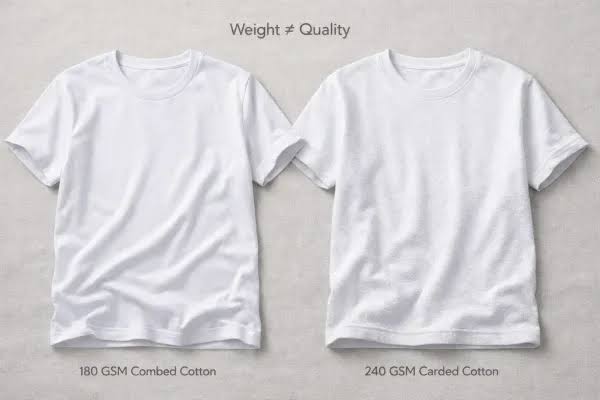
- Fabric selection: Cotton density (180 GSM, 240 GSM, 280 GSM), blends (Poly-Cotton, Supima, French Terry), and custom knitting patterns.
- Garment silhouette: Drop-shoulder fits, boxy cuts, crop tops, or classic slim fits.
- Dyeing & finishes: Bio-washing, silicone softening, acid washing, or custom Pantone color dyeing.
- Branding touchpoints: Custom woven labels, satin wash tags, branded poly bags, and hangtags.
In short, private labeling allows you to build a original clothing brand rather than selling generic merchandise.
2. Private Label vs. Print on Demand (POD) vs. Buying Blanks
To choose the right business model for your budget and growth stage, here is how private label compares to Print on Demand (POD) and buying stock blanks:
| Feature | Private-Label Manufacturing | Print on Demand (POD) | Buying Stock Blanks |
| Unit Cost | Low (₹120 – ₹300 per piece) | High (₹350 – ₹600 per piece) | Medium (₹180 – ₹350 per piece) |
| Initial Investment | Medium to High (₹30,000 – ₹1,500,000) | Zero to Minimal | Low (₹10,000 – ₹50,000) |
| Minimum Order Quantity (MOQ) | 100 – 500 pcs per style/color | 1 piece | 20 – 50 pieces |
| Customization Level | 100% Custom (Fabric, Cut, Fit, Dye, Labels) | Limited (Print only on stock garments) | Moderate (Relabeling & printing on pre-made blanks) |
| Profit Margins | High (60% – 85%) | Low (15% – 30%) | Medium (40% – 55%) |
| Scalability | High (Built for growing brands) | Low (Hard to scale past initial testing) | Moderate |
- Choose POD if you want to test print designs without maintaining inventory.
- Choose Stock Blanks if you need fast turnarounds for promotional events or small merchandise drops.
- Choose Private Label if you want to build a long-term, scalable direct-to-consumer (D2C) clothing brand with custom fits and superior fabric quality.
3. Typical Clothing Brand Manufacturing Process
Navigating the clothing brand manufacturing process requires a structured approach. Here is the step-by-step workflow followed by professional garment factories in India:
Step 1: Design & Concept Development
   │
Step 2: Creating the Tech Pack
   │
Step 3: Fabric Sourcing & Lab Dips
   │
Step 4: Pattern Making & Grading
   │
Step 5: Pre-Production Sampling
   │
Step 6: Printing & Decoration Setup
   │
Step 7: Bulk Garment Production
   │
Step 8: Quality Control (AQL Standards)
   │
Step 9: Custom Packaging & Dispatch
Step 1: Design & Concept Development
Define your product lines, target fits (e.g., oversized streetwear vs. fitted athletic gear), fabric requirements, and artwork specifications.
Step 2: Tech Pack Creation
A T-shirt tech pack India factory guide is a complete blueprint of your garment. It includes precise measurements (size charts), stitch details, fabric composition, GSM, print placements, and label placement diagrams.
Step 3: Fabric Sourcing & Lab Dips
The factory sources greige (raw) fabric and executes lab dips (color swatches) to match your requested Pantone shade.
Step 4: Pattern Making & Grading
Garment master cutters make a master paper pattern for size Medium, then scale (grade) it accurately across XS, S, M, L, XL, and XXL sizes.
Step 5: Sampling
Before mass production, the factory makes a pre-production (PP) sample. This is your chance to review the fit, stitching, print quality, and fabric feel.
Step 6: Printing & Decoration
Depending on your design, printing methods like screen printing (Plastisol/Puff/Discharge), Direct-to-Film (DTF), or custom embroidery are set up.
Step 7: Bulk Production
Once you approve the PP sample, the factory cuts fabric rolls, sends pieces to the printing floor, and moves them to sewing lines for mass assembly.
Step 8: Quality Control (QC)
A rigorous inspection checks for thread trims, measurement tolerances (+/- 1 cm), print alignment, and fabric defects using Acceptance Quality Limit (AQL) standards.
Step 9: Packaging & Logistics
Garments are steam ironed, tagged, folded, packed into individual poly bags, boxed, and shipped via regional surface transport or express courier.
4. What Determines MOQ for Low MOQ T-Shirt Manufacturer India Deals?
Finding a low MOQ T-shirt manufacturer India directory partner can be challenging because factory minimums depend on supply chain logistics rather than just sewing time.
┌──────────────────────────────────────────────────────────┐
|                FACTORS INFLUENCING FACTORY MOQs          |
├──────────────────────────┬───────────────────────────────┤
| Fabric Knitting & Dyeing | 100-300 kg per dye lot minimum|
| Printing Method          | Screen setup vs DTF digital   |
| Custom Trims & Labels    | Woven label production runs   |
| Size Ratios & Grading    | Fabric cutting table layouts  |
└──────────────────────────┴───────────────────────────────┘
Here is what drives factory minimums:
- Fabric Dyeing Batches: Industrial dyeing vats usually require a minimum run of 100 kg to 300 kg of fabric per color shade. That equals roughly 300 to 800 T-shirts per color! If you select stock-dyed fabric colors (Black, White, Navy), factories can offer lower MOQs (50–100 pieces per style).
- Printing Technique: Traditional screen printing requires custom mesh screens and inks for every color in your artwork. DTF (Direct-to-Film) printing has no screen setup costs, making lower order quantities more economical.
- Size Ratio Distribution: Cutting tables work best with balanced size ratios (e.g., 1:2:2:1 for S:M:L:XL). Requesting custom sizing across many small batches increases fabric waste and raises MOQs.
- Custom Trims and Labels: Woven main neck labels and custom wash care tags are manufactured in minimum lots of 1,000 to 5,000 units. However, many suppliers let you store extra labels at their factory for future production runs.
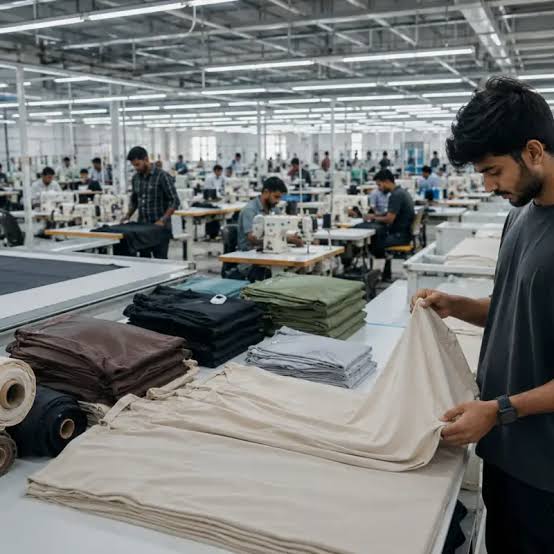
5. Private Label T-Shirt Cost Breakdown in India
Understanding your total private label T-shirt cost helps you protect your profit margins and negotiate fair quotations. Here is a realistic cost range for a high-quality 220 GSM 100% Combed Cotton Oversized T-Shirt produced in India:
| Cost Component | Average Cost Per Unit (INR) | Key Cost Factors |
| Combed Cotton Fabric (220 GSM) | ₹90 – ₹140 | Cotton grade, yarn counts, fabric type (Jersey vs. Terry) |
| Cutting, Sewing & Stitching | ₹30 – ₹60 | Stitch density, neck ribbing, flatlock details |
| Custom Printing / Embroidery | ₹25 – ₹65 | Print area, screen colors, ink types (Puff, HD, Discharge) |
| Custom Woven Labels & Tags | ₹5 – ₹12 | Label size, weave quality, custom hangtag finish |
| Finishing, Ironing & Poly Packaging | ₹8 – ₹15 | Individual poly bags, warning labels, silica gels |
| Quality Control & Packing | ₹5 – ₹10 | In-house thread trimming & measurement audits |
| Estimated Base Unit Cost | ₹163 – ₹302 per unit | (Excludes GST & Shipping) |
Pro Tip: Always factor in 12% GST on finished apparel in India, along with freight costs (typically ₹10–₹25 per garment for domestic surface transport).
6. Crucial Questions to Ask a T-Shirt Manufacturer
Before transferring a deposit to a factory, run through this verification checklist:
- “What is your standard fabric shrinkage allowance?” (Quality factories target under 3–5% post-wash shrinkage using pre-shrunk or bio-washed fabrics).
- “Do you handle fabric knitting, dyeing, and printing in-house or outsource them?” (In-house setups give you better control over lead times and quality).
- “What measurement tolerance do you work with?” (Standard industry tolerance is +/- 0.5 inches or 1 cm).
- “What is your exact sampling timeline and revision fee structure?”
- “Can you keep my custom neck labels in factory storage for my future restocks?”
7. Documents and Samples to Request Before Bulk Orders
To protect your business investment, never proceed to mass production without securing these essential deliverables:
       DOCUMENTATION CHECKLIST BEFORE BULK ORDER
  [ ] Fabric Swatch Lap Dips / Color Cards
  [ ] Approved Fit & Pre-Production (PP) Sample
  [ ] Signed Tech Pack Specification Sheet
  [ ] Written Quotation Breakdown (Itemized Costs)
  [ ] Defect & Rejection Policy Agreement
- Fabric Swatch Cards & GSM Samples: Feel the weight and texture of different knitted fabrics before committing to a production run.
- Color Lab Dips: Confirm dyed fabric colors under natural daylight and standard indoor lighting.
- Pre-Production (PP) Sample: A complete, print-ready final sample made with your exact fabric, cut, custom neck labels, and artwork.
- Itemized Quotation Sheet: A clear pricing document specifying raw material costs, printing fees, label costs, and applicable taxes.
8. Red Flags When Comparing Garment Suppliers
When vetting a private label T-shirt manufacturing India vendor, watch out for these red flags:
- Unusually Low Initial Quotes: If a manufacturer quotes ₹70–₹80 for a high-GSM cotton tee, they are likely using non-combed yarn, carded cotton blends, or prone-to-bleed dyes.
- Refusal to Provide Fit Samples: Avoid manufacturers that demand full production deposits before sending you a physical sample.
- Vague Lead Time Commitments: Reliable factories provide structured production calendars (e.g., 7 days for sampling, 15–20 days for bulk production).
- No Quality Control Checkpoints: If a supplier does not allow third-party inspections or refuses to define defect return policies, proceed with caution.
9. Sourcing Hub Comparison: Tirupur vs. Local City Manufacturers
Choosing between India’s major knitwear hub (Tiruppur) and local garment units depends on your order scale and budget:
   TIRUPPUR KNITWEAR HUB              LOCAL CITY MANUFACTURERS
   (Tamil Nadu)                       (Mumbai, Delhi NCR, Ludhiana, etc.)
   ┌──────────────────────────┐       ┌──────────────────────────┐
   │ • High Volume (500+ pcs) │       │ • Low Volume (50-100 pcs)│
   │ • Integrated Textile Hub │       │ • Hands-On Local Visits  │
   │ • Best Export Quality    │       │ • Faster Local Shipping  │
   └──────────────────────────┘       └──────────────────────────┘
Tiruppur (The Knitwear Capital of India)
- Best For: Scale, export-quality finishing, custom yarn knits, and competitive pricing on bulk runs (300+ units).
- Pros: Complete textile ecosystem with advanced dyeing units, specialized printing facilities, and experienced garment workers.
- Cons: Higher initial order minimums and longer communication cycles for smaller brand owners.
Local-City Manufacturers (Delhi NCR, Mumbai, Ahmedabad, Ludhiana, Bangalore)
- Best For: Fast turnarounds, hands-on factory visits, and smaller initial production runs (50–200 units).
- Pros: Easier communication, face-to-face meetings, lower freight costs, and flexible ordering.
- Cons: Slightly higher unit costs due to smaller production runs and localized material sourcing.
10. Private Label vs. POD Decision Matrix
Use this simple quick-decision framework to choose the right production route for your online store:
                   ARE YOU READY FOR PRIVATE LABEL?

                  Is your initial budget > ₹40,000?
                             /        \
                           YES         NO
                           /            \
             Do you need custom fit      Use Print on Demand (POD)
             & branded neck labels?      or stock blank printing!
                   /        \
                 YES         NO
                 /            \
      Go Private Label!     Buy High-Quality
      Source in Tirupur     Stock Blanks & Relabel
      or Local Factories.   for Quick Drops.
11. Standard Manufacturer Quotation Request Template
Copy and paste this professional template when reaching out to garment factories in India for quotations:
Subject: Inquiry: Private Label T-Shirt Manufacturing Quote – [Your Brand Name]
Dear [Manufacturer Name/Sales Team],
I am contacting you on behalf of [Your Brand Name]. We are preparing to launch a new line of premium T-shirts and would like to request an itemized quotation for custom private label production.
Project Overview:
- Product Type: Oversized Crew Neck T-Shirts
- Fabric Requirement: 100% Combed Cotton, 220 GSM (Bio-Washed & Silicone Washed)
- Quantity: 200 units (100 units Black, 100 units Beige)
- Size Breakdown: S:20, M:30, L:30, XL:20 per color
- Customization: 2-color screen print on front chest, custom printed neck label, individual poly-bagging
Please provide:
- Per-unit cost breakdown (Fabric + Stitching + Print + Trims + Packaging)
- Sample development cost and lead time
- Bulk production timeline after PP sample approval
- Payment terms and shipping details
I look forward to receiving your quotation and discussing sample development.
Best regards,
[Your Name]
Founder, [Your Brand Name]
[Your Contact Number / Website]
Frequently Asked Questions (FAQs)
What is the average MOQ for private label T-shirt manufacturing in India?
Factory minimum order quantities usually range from 100 to 500 pieces per style/color. However, many manufacturers offer lower MOQs (50–100 pieces) if you choose stock-dyed fabric colors instead of custom dye lots.
How much does it cost to manufacture a custom T-shirt in India?
For a high-quality 180 to 220 GSM 100% combed cotton private-label T-shirt, basic production costs range between ₹150 and ₹300 per unit, depending on order volume, printing technique, and custom packaging details.
How long does the sampling process take for custom clothing?
Garment sampling usually takes 7 to 12 business days. This includes creating patterns, sourcing fabric swatches, setting up custom prints, and stitching the pre-production sample.
Why is Tiruppur famous for T-shirt manufacturing?
Tiruppur (Tamil Nadu) produces a massive share of India’s cotton knitwear exports. Its fully integrated textile ecosystem—from spinning and knitting to dyeing and eco-friendly processing—makes it one of the world’s most cost-effective apparel manufacturing hubs.
Can I launch a private label apparel brand with a small initial budget?
Yes! You can start with a modest budget (₹30,000 – ₹50,000) by focusing on 1 or 2 versatile styles, choosing standard stock-dyed fabric colors, and partnering with a low MOQ manufacturing partner or purchasing premium stock blanks for custom relabeling.
See Also
- T-Shirt Manufacturers in India: The Top 10 for Private Label Brands in 2026
- BIGGEST T-SHIRT MANUFACTURER IN INDIA | AHMEDABAD MANUFACTURER
- Navigating the Textile Capital: How to Buy Fabric in Bulk From Tirupur Wholesale Market
- Master Guide: How to Find T-Shirt Manufacturers in Tirupur
- How to Test T-Shirt Shrinkage Before a Bulk Order: Step-by-Step Method