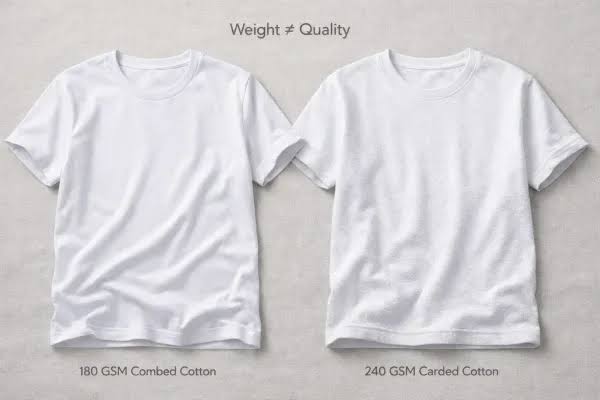

If you are planning to launch your own streetwear brand, running a custom t-shirt printing studio in India, or sourcing raw knitted fabric from textile hubs like Tirupur, Ahmedabad, or Ludhiana, one critical question will constantly pop up during cost estimation: How many T-shirts in 1 kg fabric can you actually produce?
The quick, practical answer is: You can get anywhere from 2 to 6 T-shirts from 1 kg of fabric. For a standard Indian medium-sized regular fit T-shirt made of 180 GSM cotton single jersey, you can expect around 3.8 to 4.5 T-shirts per kg.
However, asking for a single universal number in garment manufacturing is like asking how many kilometers a car can run on 1 liter of fuel without asking whether it is a small hatchback or a heavy SUV! The exact T-shirt fabric yield depends heavily on GSM (Grams per Square Meter), garment size, chest width, sleeve style, fabric width (tubular vs. open width), and cutting wastage allowances.
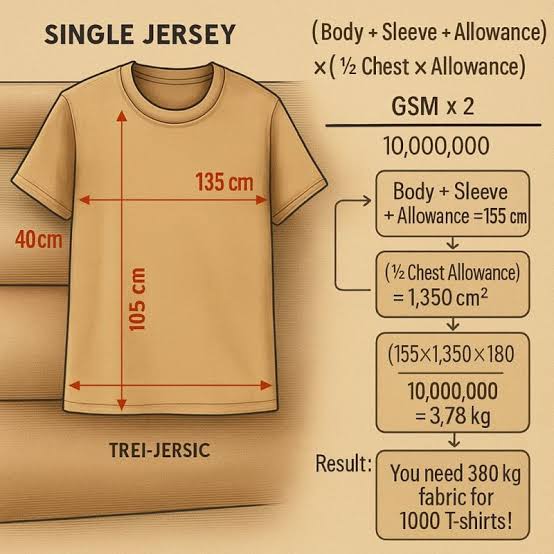
In this ultimate guide, we break down the exact mathematics behind GSM to garment calculation, share industry-proven consumption tables, compare regular vs. oversized fits, and give you practical tips to minimize fabric wastage.
📌 Quick Summary: Average Yield Snapshot (Regular Round Neck T-Shirt)
- 160 GSM (Lightweight / Summer / Promo): 4.5 – 5.5 T-shirts per kg
- 180 GSM (Standard Everyday Cotton): 3.8 – 4.5 T-shirts per kg
- 200 GSM (Premium Retail Quality): 3.2 – 3.8 T-shirts per kg
- 220 GSM (Heavyweight Streetwear): 2.6 – 3.2 T-shirts per kg
- 240 GSM (Super Heavy / French Terry / Oversized): 2.0 – 2.5 T-shirts per kg
1. Direct Answer: How Many T-Shirts Come From 1 Kg Fabric?
When calculating how many T-shirts in 1 kg fabric your cutting master can yield, you must treat fabric yield as a dynamic range rather than a fixed scalar quantity. When buying knitted single jersey rolls from mills, fabric is sold by weight (Kilograms in India), while final garments are sold per unit (Pieces).
To convert kilograms into finished pieces, five core variables dictate your exact yield:
- GSM (Grams per Square Meter): The density and thickness of the fabric. Higher GSM means heavier cloth, resulting in fewer garments per kg.
- Garment Dimensions & Size: A Size Small requires significantly less fabric area than an XXL or a trendy oversized drop-shoulder fit.
- Fabric Width & Diameter: Whether you use 36-inch tubular dia fabric or 72-inch open-width fabric determines marker layout efficiency.
- Sleeve Style & Collar Rib: Full sleeves consume ~30% more fabric than short sleeves. Neck ribbing and sleeve cuffs also add weight.
- Cutting Wastage & Scrap Percentage: The space left between pattern pieces on the cutting table (lay plan) accounts for 10% to 15% fabric loss.
2. Fabric-Yield Formula: How GSM to Garment Calculation Works
To calculate the exact fabric consumption per T-shirt, professional garment merchandisers and factory pattern masters use a standard metric consumption formula. Understanding this calculation will help you negotiate fabric orders with mills confidently.
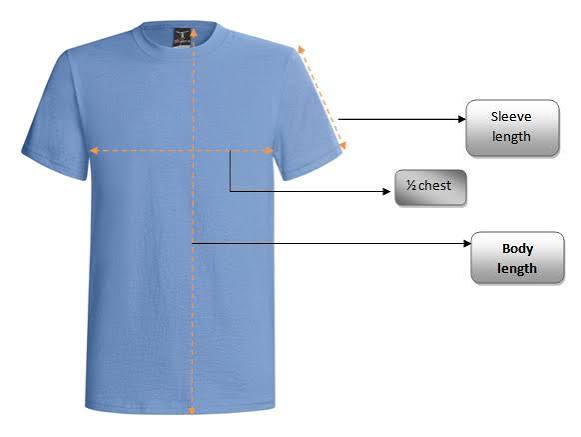
Garment Weight Formula (Per Piece in Grams)
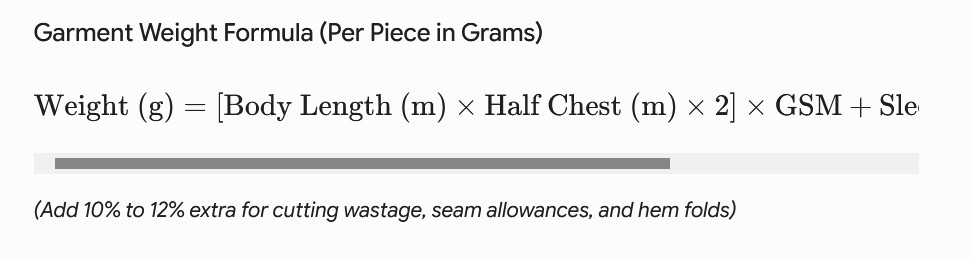
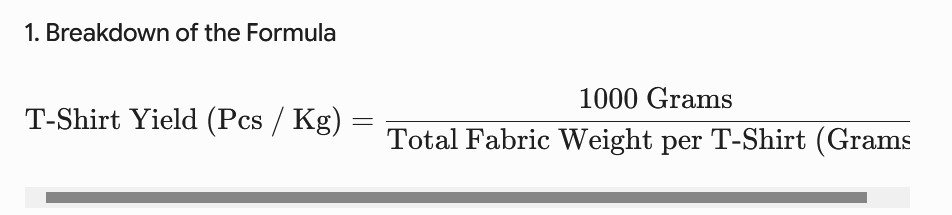
T-Shirt Fabric Yield Formula (Pieces per Kg)
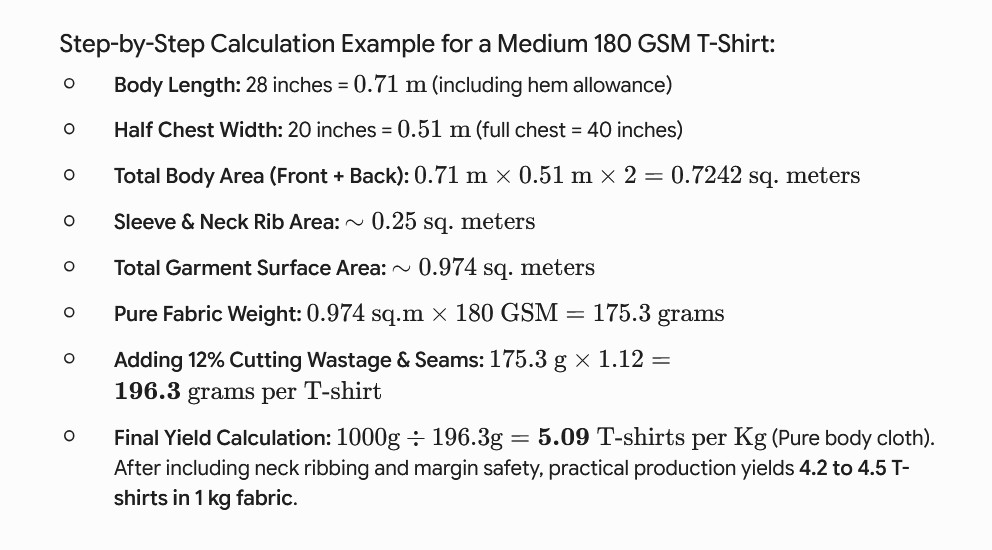
Step-by-Step Calculation Example for a Medium 180 GSM T-Shirt:
GSM is the single most influential factor when estimating how many T-shirts in 1 kg fabric you will get. Here is a clear breakdown across popular fabric densities in the Indian market:
| Fabric GSM | Fabric Feel & Application | Avg Weight / Piece (Medium) | Estimated Yield (Pcs / Kg) |
| 160 GSM | Lightweight, highly breathable summer tees, promotional events, innerwear | 170g – 195g | 4.8 – 5.5 Pcs |
| 180 GSM | Standard high-volume retail quality, bio-washed 100% combed cotton | 210g – 235g | 3.8 – 4.5 Pcs |
| 200 GSM | Premium durable crew necks, structured corporate merchandise | 245g – 275g | 3.2 – 3.8 Pcs |
| 220 GSM | Heavyweight streetwear, boxy vintage tees, dense luxury feel | 285g – 320g | 2.7 – 3.2 Pcs |
| 240 GSM | Super heavyweight, drop-shoulder luxury streetwear, French terry / loopknit | 350g – 420g | 2.0 – 2.5 Pcs |
Detailed Analysis by Fabric Weight:
- 160 GSM Fabric Yield: Highly economical for corporate giveaways and high-volume promotional runs. Yields nearly 5 to 6 pieces per kg for smaller sizes, though transparency can be a concern if uncombed yarns are used.
- 180 GSM Fabric Yield: The undisputed king of custom printing and e-commerce brands in India. Perfectly balances durability, comfort, and cost-efficiency, delivering approximately 4 solid T-shirts per kg.
- 200 GSM Fabric Yield: Offers a premium, opaque feel. Popular among boutique lifestyle brands. Yield drops to around 3.5 T-shirts per kg.
- 220 GSM Fabric Yield: Essential for sturdy streetwear fits that hold their structure without clinging to the body. You will average around 3 T-shirts per kg.
- 240 GSM Fabric Yield: Heavyweight cotton. Because each shirt weighs over 380–420 grams (especially in oversized cuts), 1 kg of fabric yields only about 2 T-shirts.
4. Yield by T-Shirt Size: Small to Oversized Breakdown
Garment size drastically impacts fabric surface area. If your size breakdown is skewed heavily toward larger sizes, your overall batch T-shirt fabric yield per kg will decrease.
Below is a standard consumption matrix based on 180 GSM 100% Combed Cotton single jersey fabric:
| T-Shirt Size | Chest Width (Inches) | Body Length (Inches) | Fabric Cons. per Pc (Grams) | Yield per 1 Kg Fabric |
| Small (S) | 38″ | 26″ | 185g – 200g | 5.0 – 5.4 Pcs |
| Medium (M) | 40″ | 27″ | 210g – 225g | 4.4 – 4.7 Pcs |
| Large (L) | 42″ | 28″ | 235g – 255g | 3.9 – 4.2 Pcs |
| Extra Large (XL) | 44″ | 29″ | 265g – 285g | 3.5 – 3.7 Pcs |
| XXL | 46″ | 30″ | 295g – 320g | 3.1 – 3.3 Pcs |
| Oversized (L/XL Cut) | 48″ – 50″ | 29″ – 30″ | 340g – 390g | 2.5 – 2.9 Pcs |
5. Regular Fit vs. Oversized Fit: The Fabric Consumption Gap
The streetwear movement has made oversized drop-shoulder T-shirts hugely popular in India. However, many new brand founders fail to factor in how dramatically oversized silhouettes alter fabric consumption per T-shirt.
An oversized T-shirt is not just a larger regular T-shirt; it features dropped shoulders, wider chest measurements, longer sleeve lengths, and wider armholes.
| Feature Comparison | Regular Fit (180 GSM – Size L) | Oversized Fit (240 GSM – Size L) |
| Chest Measurement | 42 Inches | 48 – 50 Inches |
| Sleeve Pattern | Standard fitted sleeve (8.5″) | Extended drop-shoulder sleeve (11″) |
| Fabric Area Required | ~1.05 sq. meters | ~1.45 sq. meters |
| Garment Weight | ~240 grams | ~420 grams |
| Yield per 1 Kg Fabric | 4.1 T-Shirts / Kg | 2.3 T-Shirts / Kg |
💡 Key Takeaway for Brand Owners: Switching from a 180 GSM regular fit to a 240 GSM oversized streetwear fit cuts your how many T-shirts in 1 kg fabric yield almost in half! Ensure your retail pricing reflects this increased raw material cost.
6. How Fabric Width & Diameter Affect Yield
Even with identical GSM and size requirements, the physical width of the fabric roll plays a crucial role in marker efficiency (how tightly pattern pieces fit together during cutting).
- Tubular Fabric (Tubular Dia): Common in Tirupur knitting mills (e.g., 34″ or 36″ dia tubular). Tubular fabric has no side seams, making it ideal for seamless body cuts. However, if your T-shirt chest size does not match the tube diameter, cutting scrap increases significantly.
- Open Width Fabric (Slit & Stentered): Fabric is slit open to full width (typically 60″, 68″, or 72″ open width). Open width allows computerized CAD marker layouts to interlock front, back, and sleeve pieces effectively, raising marker efficiency up to 85%–88%.
7. How Collar Ribs, Sleeves & Matching Affect Consumption
When computing GSM to garment calculation, beginners often forget that a T-shirt is not made entirely of body fabric:
- Neck Ribbing (1×1 or 2×2 Rib): Collar ribs are usually knitted with elastane/spandex for stretch recovery. Rib consumption adds approximately 15 to 25 grams per T-shirt. Most manufacturers buy separate rib fabric rolls in smaller quantities.
- Sleeve Style: Full-sleeve T-shirts consume ~30% to 35% more fabric than short-sleeve T-shirts. Raglan sleeves also increase scrap loss due to diagonal cut lines.
- Pattern Matching (Stripes & Checks): Engineered stripe single jersey or checked fabrics require precise pattern alignment across seams. This requirement can lower marker efficiency and increase fabric consumption by 15% to 25%.
8. Realistic Cutting Wastage Assumptions in Factories
No cutting process is 100% efficient. When answering how many T-shirts in 1 kg fabric can be made in production, always build in standard loss allowances:
- Marker Loss (10% – 12%): The unavoidable gaps between curved pattern pieces on the cutting marker.
- End-of-Roll Loss (2% – 3%): Remnants left at the end of fabric rolls that are too short for a full lay.
- Defect Clearance (1% – 2%): Spots, yarn slubs, or holes in the knitted roll that must be bypassed during spreading.
- Total Wastage Allowance: Always multiply pure calculated garment weight by a factor of 1.12 to 1.15 (12% to 15% extra fabric) to avoid material shortfalls in production.
9. Practical Yield Calculator Guide for Apparel Brands
Use this quick step-by-step formula table when calculating fabric orders for your next batch on MakeMyT-Shirt.com:
| Order Scenario | Target Order Quantity | Fabric GSM & Fit | Yield / Kg | Total Fabric to Buy |
| Scenario A | 100 Pcs (Assorted S-XL) | 180 GSM Regular Fit | 4.0 Pcs/Kg | 25 Kg Fabric |
| Scenario B | 100 Pcs (Assorted S-XL) | 240 GSM Oversized Streetwear | 2.3 Pcs/Kg | 43.5 Kg Fabric |
| Scenario C | 500 Pcs Corporate Order | 160 GSM Promo Fit | 5.0 Pcs/Kg | 100 Kg Fabric |
10. Frequently Asked Questions (FAQs)
Q1: How many T-shirts in 1 kg fabric of 180 GSM can I get?
For 180 GSM 100% cotton bio-washed fabric, you will get approximately 3.8 to 4.5 T-shirts per kg for standard adult medium/large sizes, including cutting wastage allowance.
Q2: Does 100% cotton fabric yield the same as polyester or PC blends?
If the GSM and garment dimensions are identical, 1 kg of cotton and 1 kg of polyester will yield roughly the same number of pieces. However, polyester yarns can be knitted into lower GSMs (e.g., 130-150 GSM dry-fit) without becoming sheer, yielding up to 6.5 sports tees per kg.
Q3: How much neck rib fabric do I need for 100 T-shirts?
As a general rule, 1 kg of 1×1 cotton rib fabric is sufficient to stitch 40 to 50 standard neck collars. For 100 T-shirts, order approximately 2.0 to 2.5 kg of matching rib fabric.
Q4: Why does my factory’s yield differ from online fabric yield calculators?
Online calculators often estimate pure geometry without accounting for lay plan efficiency, roll end remnants, seam allowances, or collar ribbing. Always add a 12% to 15% wastage buffer to practical production estimates.
See Also
How to Calculate Knit Fabric Consumption
How to Calculate T-Shirt Fabric Consumption?
T-Shirt Costing Formula India: Calculate Cost Per Piece for 50, 100 and 500 T-Shirts
Oversized Drop Shoulder T Shirt Size Chart: The Structural Silhouette Guide for Indian Streetwear Fits