
Starting a merchandise brand once meant buying 100 T-shirts, finding space to store them and hoping every colour and size would eventually sell. Print on demand has changed that completely.
Today, Indian creators can upload a design, publish a product and send it for printing only after a customer places an order. There is no warehouse full of unsold XXL hoodies, no bulk-production headache and no late-night packing session involving brown tape and mild regret.
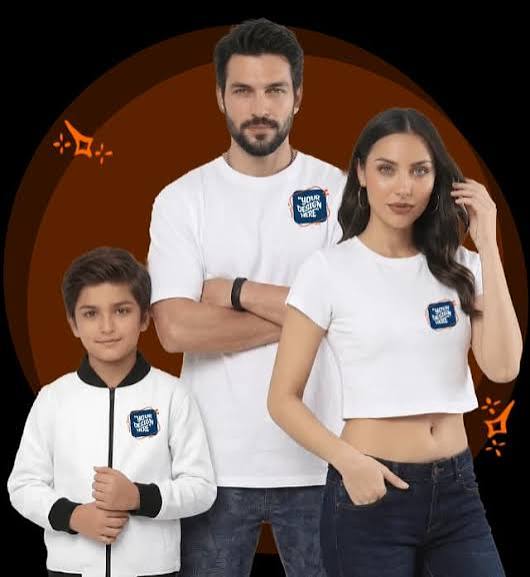
But choosing a fulfilment platform is still tricky. The Blinkstore vs Qikink comparison is especially important because both platforms promise inventory-free selling, automated fulfilment and white-label merchandise. However, they approach the business from slightly different directions.
Blinkstore has traditionally positioned itself as an easy, all-in-one merchandise store builder. Qikink has been known as a wider print-on-demand and dropshipping engine for sellers using Shopify, WooCommerce and other ecommerce systems.
That distinction is no longer absolute. Qikink now offers its own free Creator Store, while Blinkstore also advertises integrations and APIs. So, which platform actually makes more sense in 2026?
Let us compare the product catalogues, margins, wallets, storefronts, branding tools, COD support and integrations that matter to Indian sellers.
Note: This Blinkstore vs Qikink comparison is based on publicly available platform information as of 11 July 2026. Always order samples and confirm current charges inside the seller dashboards before launching paid advertisements.
Blinkstore vs Qikink: Quick Answer
Choose Blinkstore when your priority is setting up a simple creator-merchandise website quickly, especially for prepaid sales, community merchandise, college clubs or small product experiments.
Choose Qikink when you need a much wider catalogue, Cash on Delivery, multiple printing technologies, advanced branding, Shopify or WooCommerce integration and infrastructure that can support a growing ecommerce brand.
For a basic creator store, both platforms are now credible options. For broader product choice and scalable dropshipping operations, Qikink currently has the stronger overall fulfilment ecosystem.
Blinkstore vs Qikink Comparison at a Glance
| Feature | Blinkstore | Qikink |
|---|---|---|
| Account or subscription cost | Free storefront and POD setup | Free seller account and Creator Store |
| Advertised product range | 50+ products | 350+ products and 2,750+ SKUs |
| Standalone store builder | Yes | Yes, through Qikink Creator Stores |
| Custom domain | Available | Available |
| Shopify integration | Advertised | Dedicated integration |
| WooCommerce integration | Advertised | Dedicated plugin |
| Open API | Available for integrations | Available |
| COD | Public pricing page currently says no COD; verify dashboard availability | Supported |
| Wallet requirement | Relevant to selected COD or fulfilment models | Sufficient wallet credit required for connected-store fulfilment |
| Printing options | DTG, screen printing and other standard formats | DTG, DTF, sublimation, AOP, embroidery, puff, engraving, UV and more |
| Custom branding | Labels and packaging advertised | Neck labels, hangtags, pack-ins, stickers and cards |
| Best suited for | Quick creator merchandise stores | Scalable POD brands and multi-channel sellers |
Blinkstore advertises a free storefront, free custom-domain connection, analytics integrations and more than 50 products. Qikink currently promotes more than 350 products, over 2,750 SKUs, 10-plus printing methods, Shopify and WooCommerce connectivity, COD and delivery coverage across more than 29,000 pincodes. (Blinkstore)
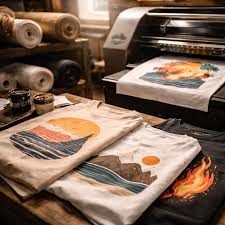
Understanding the Two Print-on-Demand Models
Before comparing individual T-shirts and dashboard buttons, it helps to understand the basic difference in positioning.
Blinkstore: A Store Builder with Fulfilment Built In
Blinkstore’s main attraction is simplicity. You create a store, choose products, upload designs, set your margin and share the store link with customers.
The free plan includes a hosted storefront, a Blinkstore subdomain, custom-domain connection, product listings, payment collection, printing, shipping and post-order support. It also advertises unlimited stores and unlimited product listings. (Blinkstore)
This setup is useful when your business begins with an audience rather than an ecommerce operation. A YouTuber, meme-page owner, artist, student organisation or NGO can launch merchandise without first learning Shopify, WordPress hosting or courier reconciliation.
Qikink: A Fulfilment Engine That Now Builds Stores Too
Qikink has traditionally been attractive to sellers who already own an ecommerce store. It can connect with Shopify, WooCommerce or a custom system through an API, allowing store orders to move into the fulfilment workflow.
However, Qikink’s Creator Store now gives beginners a free hosted shop, built-in payments, a free subdomain, custom-domain support, returns management, store analytics and weekly payouts. This makes the Blinkstore vs Qikink storefront comparison much closer than it used to be. (Qikink)
The real difference is therefore not simply “store builder versus supplier”. It is now more accurate to describe Blinkstore as creator-store-first and Qikink as fulfilment-and-scale-first.
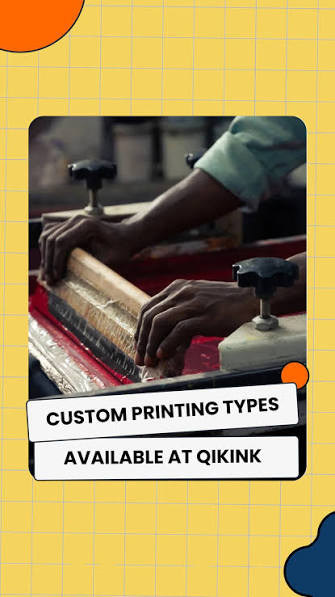
The Base Catalogue Fight: T-Shirts, Hoodies and More
A large product catalogue looks impressive, but sellers should focus on relevant product depth rather than headline numbers.
You do not need 300 random products when your customers only want heavyweight oversized T-shirts. At the same time, a catalogue that is too narrow can prevent you from creating bundles, seasonal drops and higher-value orders.
Blinkstore Product Catalogue
Blinkstore promotes a catalogue of more than 50 customisable products with over 20 colour options across selected products. Its categories include:
- Men’s, women’s, unisex and children’s clothing
- Regular and oversized T-shirts
- Sweatshirts, crop tops and hoodies
- Mugs and drinkware
- Tote bags and accessories
- Phone cases and tech products
- Posters, stationery and home décor
- Stickers and customised packaging
Blinkstore is strong enough for a conventional creator-merchandise collection. You can comfortably build a store around graphic T-shirts, hoodies, mugs, tote bags and smaller accessories.
Its limitation appears when you want to test many apparel constructions, specialised fabrics, all-over-print garments or unusual merchandise categories.
Qikink Product Catalogue
Qikink currently advertises more than 350 products and over 2,750 product-and-variant SKUs across apparel, accessories, home and living, drinkware, pet wear and several niche categories. (Qikink)
The catalogue includes:
- Standard, premium and oversized T-shirts
- Crop tops, tank tops and dresses
- Hoodies, sweatshirts and jackets
- Kidswear and baby clothing
- All-over-print apparel
- Bottomwear and activewear
- Caps and headwear
- Mugs, bottles and tumblers
- Tote bags and other bags
- Posters and home products
- Phone cases and desk accessories
- Pet clothing and pet tags
- Embroidered and specialised merchandise
Qikink also advertises more than 10 production methods, including DTG, DTF, sublimation, all-over printing, embroidery, puff printing, engraving and UV printing. (Qikink)
Which Platform Wins the Catalogue Round?
Qikink wins comfortably on catalogue breadth, printing options and specialised merchandise.
Blinkstore still provides enough choice for a standard merch store. In fact, its smaller catalogue may feel easier to navigate when you simply want to launch five reliable products.
However, a fashion-focused brand selling oversized fits, embroidery, coordinated collections, activewear or multiple fabric weights is likely to outgrow a smaller catalogue faster.
Blank Garments, Colourways and Size Availability
Product count alone does not tell you whether a POD platform is usable. The more practical questions are:
- Is the same T-shirt available in enough colours?
- Are sizes consistently stocked?
- Does the fabric suit Indian weather?
- Is the fit genuinely oversized or merely one size larger?
- Will a popular colour suddenly disappear during a campaign?
Blinkstore advertises 20-plus colours across its product range. Qikink promotes up to 25 colour options on selected garments, with additional variants being introduced over time. (Blinkstore)
Neither number guarantees that every product will be available in every colour or size. Stock can vary across garments, so shortlist the exact blanks you intend to sell and monitor those rather than relying on the overall catalogue figure.
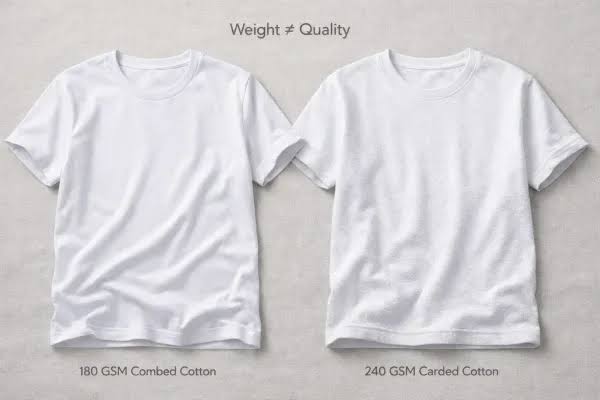
Most importantly, order samples. Fabric GSM, collar construction, shrinkage, stitching, colour accuracy and print texture cannot be judged from a mockup.
Print Quality: Do Not Pick a Winner Without Samples
Both platforms market their products as retail-quality merchandise. That does not mean every print method will work equally well for every design.
A detailed anime illustration, a small embroidered logo and a neon typographic graphic may each need different production methods. Results also depend on the garment colour, artwork resolution, print area and ink coverage.
Before launching your store:
- Order the same design on light and dark fabric.
- Wash each sample at least three times.
- Check cracking, fading, bleeding and shrinkage.
- Photograph the product in natural light.
- Confirm the final packed appearance.
- Measure the garment against the published size chart.
The strongest Blinkstore vs Qikink decision is not the one made from a homepage. It is the one made after comparing actual samples from the products you intend to sell.
The Financial Setup: Fees, Margins and Working Capital
Both platforms let sellers start without paying a monthly POD subscription. But “free to start” does not mean every sale is free to process.
Your actual profit should be calculated as:
Selling price – product cost – printing cost – shipping – GST – payment or COD charges – returns – discounts – advertising cost = real profit
A seller may describe a ₹250 difference between selling price and fulfilment cost as a ₹250 profit. That number is not meaningful when ₹150 was spent acquiring the customer through Instagram ads.
Blinkstore Profit Model
Blinkstore allows sellers to add their chosen profit margin over the platform’s base product price. It handles the storefront, checkout, fulfilment and shipping, after which eligible profit is transferred to the seller.
The platform says it does not charge monthly store fees, listing fees or an additional commission over the displayed fulfilment structure. It also provides free custom-domain connection and unlimited stores. (Blinkstore)
However, sellers should verify payout timing in the current dashboard. Blinkstore’s public material contains different descriptions, ranging from on-request redemption to automated bank payouts over a longer cycle.
There is also a COD inconsistency worth noting. A 2024 Blinkstore announcement described prepaid-wallet support for COD, but its current public pricing page states that Blinkstore stores accept online payments and do not yet offer COD. Verify the exact feature available to your account before promising COD to customers. (Blinkstore)
Qikink Wallet and Payment Model
When Qikink is connected to an external Shopify, WooCommerce or custom store, the customer pays through your store. You then pay Qikink the fulfilment amount.
Qikink requires sufficient wallet credit to process connected-store orders. For COD orders, the seller funds the fulfilment cost first, after which the collected COD amount is remitted following successful delivery. Its help centre states that COD remittance can be directed to the wallet or a verified bank account. (Qikink)
This means Qikink sellers need some working capital. You may not buy inventory, but you still need enough wallet balance to process orders while waiting for COD remittances.
Qikink also advertises monthly cashback of 4% to 10% depending on order volume. This can improve margins for a store processing consistent sales, although the current eligibility slab should be checked before making financial projections. (Qikink)
For sellers using Qikink Creator Stores rather than an external ecommerce platform, the company advertises built-in payments and weekly payouts. (Qikink)
Storefront Hosting: Which Is Easier to Launch?
Blinkstore Store Builder
Blinkstore remains very attractive for creators who want to get online with minimal setup. You can:
- Create a hosted merchandise store
- Use a free Blinkstore subdomain
- Connect your own domain
- Add a logo, banner and brand information
- Publish unlimited products
- Set product-level margins
- Add Google Analytics and Meta Pixel
- Track orders, sales and payouts
- Use an integrated mockup generator
- Create multiple stores for different ideas
Blinkstore also promotes built-in SEO fields for store names, descriptions, product titles, product descriptions and tags. (Blinkstore)
This makes it suitable for testing several niches without paying separately for each Shopify website.
Qikink Creator Store
Qikink’s newer Creator Store provides:
- A free hosted shop
- A
yourbrand.qikink.comaddress - Custom-domain connection
- Storefront customisation
- Built-in UPI, card and Pay Later payments
- Product and design bundles
- Order and revenue analytics
- Returns management
- Weekly seller payouts
- Access to Qikink’s wider product catalogue
These features significantly reduce Blinkstore’s earlier advantage in standalone store building. (Qikink)
For a new seller comparing only free hosted stores, the decision now comes down to interface preference, catalogue relevance, payment options and sample quality.
Shopify, WooCommerce and Custom Store Integrations
This is where Qikink continues to look more mature.
Qikink provides dedicated Shopify and WooCommerce connections, along with an open API for custom storefronts. Orders can sync into the platform, products can be created through the dashboard and fulfilment can be managed across sales channels. (Qikink)
Blinkstore also advertises Shopify, WooCommerce and API connectivity. However, its strongest public-facing proposition remains the inbuilt Blinkstore storefront.
Choose an external ecommerce platform when you need:
- Advanced website design control
- Email marketing automations
- Detailed customer segmentation
- Upselling and cross-selling apps
- Subscription products
- Complex discount rules
- International storefronts
- Multiple fulfilment suppliers
- Deeper checkout customisation
For a straightforward merchandise link in your Instagram bio, a free hosted store is usually enough. For a brand planning extensive performance marketing, a full Shopify or WooCommerce setup offers more long-term control.
COD and Indian Ecommerce Reality
COD can increase conversions in India, especially among first-time buyers and customers outside major metros. It can also create fake orders, refusals and costly return-to-origin shipments.
Qikink actively promotes COD, delivery across more than 29,000 pincodes and zero RTO charges under its current POD offering. It also advertises dispatch within two to three business days for most orders. (Qikink)
Blinkstore’s current pricing page says its hosted stores support UPI, cards, net banking and digital wallets but not COD. (Blinkstore)
Therefore, Qikink has a clear advantage when COD is central to your sales strategy. Blinkstore may still work well for creators whose followers already trust them and are comfortable paying online.
Custom Branding and the Unboxing Experience
A plain courier packet may be acceptable for a one-time college-event T-shirt. It is less suitable for a fashion label charging premium prices.
Blinkstore advertises custom neck labels, branding and packaging options, although detailed costs may depend on the project or seller arrangement. (Blinkstore)
Qikink publicly lists multiple branding services, including:
- Inside neck labels
- Hangtags
- Custom pack-ins
- Logo stickers
- Thank-you cards
Some branding materials require an initial quantity purchase. For example, its published neck-label programme specifies an initial batch and setup charge, followed by free refills subject to activity conditions. (Qikink)
Qikink therefore offers the more clearly documented branding system for sellers trying to create a recognisable apparel label rather than simply selling printed merchandise.
Blinkstore vs Qikink: Which One Should You Choose?
Choose Blinkstore When:
- You want to launch a small merchandise store quickly.
- Your audience is comfortable with prepaid orders.
- You do not want to configure Shopify or WordPress.
- You want to test multiple store ideas without monthly subscriptions.
- You are selling standard T-shirts, hoodies, mugs and accessories.
- You value creator-focused simplicity over catalogue depth.
Choose Qikink When:
- You want a wider range of garments and speciality products.
- COD is important to your customers.
- You plan to connect Shopify or WooCommerce.
- You need embroidery, puff printing, AOP or other specialised methods.
- You want more structured white-label branding.
- You expect to sell across multiple channels.
- You are building a long-term D2C fashion or merchandise brand.
- You can maintain enough wallet balance to process orders.
The Verdict: Who Takes the Crown?
In the current Blinkstore vs Qikink print on demand India comparison, there is no universal winner for every creator.
Blinkstore wins on creator-first simplicity. It remains a practical gateway for launching a prepaid merchandise store without buying inventory, hosting or a separate ecommerce subscription.
Qikink wins on fulfilment depth and scalability. Its larger catalogue, COD support, branding options, printing methods, integrations and logistics coverage make it better suited to serious dropshippers and growing ecommerce brands.
For standalone store building, Blinkstore is no longer the automatic winner because Qikink Creator Stores now provide a free storefront, custom domain, built-in payments, returns support and weekly payouts. Qikink may actually offer the stronger all-round package when its wider catalogue and COD infrastructure are included.
Still, beginners should not select a platform based only on feature count. Launch a test store on both, order equivalent samples, calculate the complete landed cost and speak to support before choosing.
The platform is only the engine. Your niche, designs, product photography, pricing and marketing will determine whether the store moves.
A Practical Launch Checklist
Before publishing your first print-on-demand collection:
- Pick a clearly defined niche rather than designing for “everyone”.
- Shortlist three to five core products.
- Order samples from both platforms.
- Test fit, shrinkage, printing and packaging.
- Calculate margins after shipping, GST, COD and advertising.
- Confirm return and replacement responsibilities.
- Check the live stock of important sizes and colours.
- Set realistic dispatch and delivery expectations.
- Purchase a memorable domain.
- Launch with a small collection before adding dozens of products.
A focused five-product store with excellent designs will usually perform better than a confusing catalogue containing 100 unrelated items.
Frequently Asked Questions
Is Blinkstore better than Qikink?
Blinkstore may be better for a creator who wants a simple, prepaid merchandise store with minimal technical setup. Qikink is generally better for sellers who need COD, a larger product catalogue, specialised printing and ecommerce integrations.
Which is cheaper, Blinkstore or Qikink?
Both platforms allow sellers to start without a monthly POD subscription. The cheaper option depends on the exact garment, print size, GST, shipping, branding and payment method. Compare the final landed cost of the same product rather than only its blank garment price.
Does Blinkstore offer a free online store?
Yes. Blinkstore offers a free hosted storefront, free subdomain, custom-domain connection and unlimited product listings under its advertised model. (Blinkstore)
Does Qikink provide a free store builder?
Yes. Qikink Creator Stores provide a hosted store, free subdomain, built-in payments, custom-domain support, fulfilment and weekly payouts. (Qikink)
Does Blinkstore support Cash on Delivery?
Blinkstore’s current public pricing and homepage information say that its hosted stores support online payments but not COD. An older announcement discussed wallet-based COD, so sellers should verify current account-level availability before launching. (Blinkstore)
Does Qikink support Cash on Delivery?
Yes. Qikink supports COD and allows remittances to be credited to a seller’s wallet or verified bank account after successful delivery. (Qikink)
Can I connect Qikink to Shopify?
Yes. Qikink provides a dedicated Shopify integration and can automatically sync store orders into its fulfilment workflow. (Qikink)
Can I use my own domain with Blinkstore and Qikink?
Yes. Both platforms advertise the ability to connect a seller-owned custom domain to a hosted store.
Which platform has more print-on-demand products?
Qikink currently advertises more than 350 products and over 2,750 SKUs. Blinkstore advertises more than 50 products. Product availability can change, so check the live catalogues before deciding. (Blinkstore)
Is print on demand profitable in India?
It can be profitable when sellers maintain healthy margins, choose a focused niche and control advertising and return costs. Inventory risk is lower than in bulk manufacturing, but marketing expenses, COD refusals, discounts and customer acquisition can still reduce profits.
Which platform is better for wholesale dropshippers?
Qikink is generally the stronger option for scaling and multi-channel dropshipping because of its wider catalogue, wallet-based fulfilment model, COD support, custom branding, Shopify and WooCommerce integrations and open API.
Which platform is better for influencers and artists?
Blinkstore is a convenient option for influencers and artists who need a quick, simple merchandise link. Qikink Creator Stores are also worth considering when the creator wants a larger product range or COD support.
Final Word
The Blinkstore vs Qikink decision is ultimately about the type of business you are building.
Blinkstore is an easy inventory-free gateway for getting a merch idea online without setting up a complicated ecommerce stack. Qikink is a broader fulfilment ecosystem that gives ambitious sellers more room to experiment, brand and scale.
Do not chase the platform with the longest feature list. Choose the platform that delivers your three most important products consistently, leaves enough margin after every expense and creates an experience your customer will happily order from again.
See Also
Qikink vs Printrove: Which Is Better for Print on Demand in India?
Blinkstore vs Qikink — Print-On-Demand Brands Recommend! Let Me Explain
The Breathable Ink Quest: The Secret to Zero-Hand-Feel Custom Apparel
The Indian Supplier Review: Printrove vs Qikink vs Merch Factory